

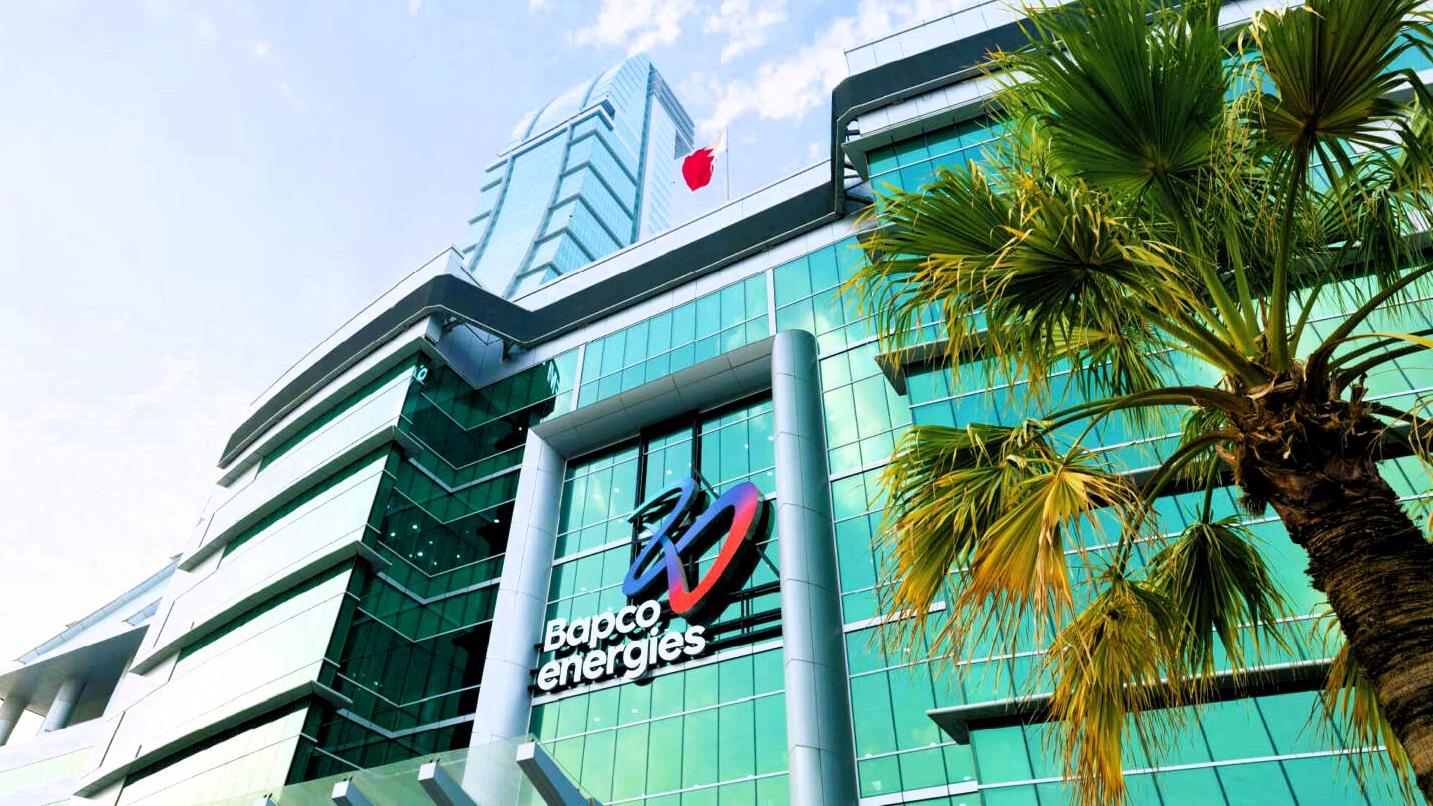
BeVentures, the venture capital arm of state energy conglomerate Bapco Energies, is leading the exercise to explore the potential of building a modular nuclear plant in the kingdom, sources have told MEED


Bahrain is exploring the use of nuclear power for domestic consumption as well as for potential export of surplus, with state energy conglomerate Bapco Energies tasked with studying the prospect of building a modular nuclear power plant.
According to sources, the proposed project is being led by BeVentures, the venture capital arm of Bapco Energies, which was launched in July 2024.
Under the plan being studied, power to be produced by the nuclear facility will be supplied mainly to major industrial complexes in the kingdom, such as Aluminium Bahrain (Alba) and Bapco Refining, for clean production of aluminium and refined products, respectively, in line with Bahrain’s ambition of achieving net-zero emissions by 2060.
BeVentures has, in turn, approached global consultancy firms such as Bechtel, Fluor, Kent, Technip Energies and Wood to assist with concept study and early-stage planning and assessment of the modular or small nuclear power project.
Bapco Energies and BeVentures are also considering tapping into private financing and/or equity partnerships, in part or in full, for the proposed project, sources told MEED.
Bapco Energies did not respond to MEED’s request for comment and additional information on the proposed modular nuclear project.
Mark Thomas, the group CEO of Bapco Energies, told MEED in an interview in April last year that BeVentures was considering investments in “ ... new technologies that can both help existing business, as well as prepare ... for the future, for the energy transition”.
“We’re looking at opportunities principally within our existing businesses around oil and gas production, refining and petrochemicals. But we’re also looking at elements that will prepare us for the future, more into renewables,” Thomas said, without explicitly mentioning nuclear power.
Case for nuclear power
Bahrain’s interest in exploring nuclear power has been driven primarily by the limitations of its hydrocarbon endowment. Given its small territorial size – about 786 square kilometres – Bahrain holds relatively modest hydrocarbon reserves compared with its Gulf peers.
The kingdom produces about 200,000 barrels a day (b/d) of oil, of which the Awali Field, also known as the Bahrain Field, contributes approximately 42,400 b/d.
Most of Bahrain’s crude production – about 145,000 b/d – comes from the offshore Abu Safah field, located in Gulf waters between Bahrain and Saudi Arabia and shared between Bapco Energies’ subsidiary Bapco Upstream and Saudi Aramco.
Bapco Energies has long pursued additional resources to boost oil and gas output. However, the discovery of the Khalij Al-Bahrain basin in 2018 – its biggest find in decades – has yet to live up to its promise. Initially estimated to hold 80 billion barrels of oil and 10-20 trillion cubic feet of gas, the find has not translated into production at the anticipated scale. Other, smaller exploration efforts with foreign players have also yet to yield the desired results.
The kingdom therefore remains heavily reliant on its larger neighbour, Saudi Arabia, for oil and gas supplies, importing about 350,000 b/d from Aramco via the AB-4 pipeline.
At the same time, given its environmental sustainability targets, other forms of renewable energy – mainly solar – are unlikely on their own to enable Bahrain to reach net zero by 2060.
Bapco Energies published emissions-reduction targets in July 2023, in one of the most detailed disclosures by any state energy enterprise in the GCC. It has also engaged advisers including Boston Consulting Group to help devise a strategy to meet its environmental goals, and Standard Chartered to support financing requirements.
Using 2017 as a baseline year, Bapco Energies has committed to reducing absolute Scope 3 emissions in Bahrain by 30% by 2035, and to reaching net-zero Scope 3 emissions by 2060.
In addition, Bapco Energies sets out net emissions-intensity reduction targets for Scope 1 and 2 – also using 2017 as a baseline – of 15% by 2025, 25% by 2030, 30% by 2035, 50% by 2040 and 75% by 2050, with the aim of achieving net-zero Scope 1 and 2 emissions by 2060.
Bahrain has been laying the groundwork to enable it to tap nuclear power for household and industrial needs in the future.
The kingdom is already operating under a Country Programme Framework (2024–29) with the International Atomic Energy Agency (IAEA), which establishes regulatory and safety benchmarks that must be in place before any commercial reactor construction begins.
In July last year, Manama also signed a civilian nuclear cooperation memorandum of understanding with the US. Financed under the US Foundational Infrastructure for Responsible Use of Small Modular Reactor Technology (FIRST) programme, the partnership provides Bahrain with technical support to develop secure, weaponisation-free civil nuclear infrastructure.
Small modular reactor (SMR) technology could be the most viable pathway forward for Bapco Energies in its quest to develop domestic nuclear power. Unlike conventional large-scale, capital-intensive gigawatt reactors, SMR units – typically under 300MW – require only a fraction of the land area needed for solar capacity of an equivalent output.

You might also like...
Petrofac forms new board following takeover
17 July 2026
Accor expects Dubai hotel recovery by mid-2027
17 July 2026

A MEED Subscription...
Subscribe or upgrade your current MEED.com package to support your strategic planning with the MENA region’s best source of business information. Proceed to our online shop below to find out more about the features in each package.