


Government military advance overwhelms SDF and forces concessionary ceasefire


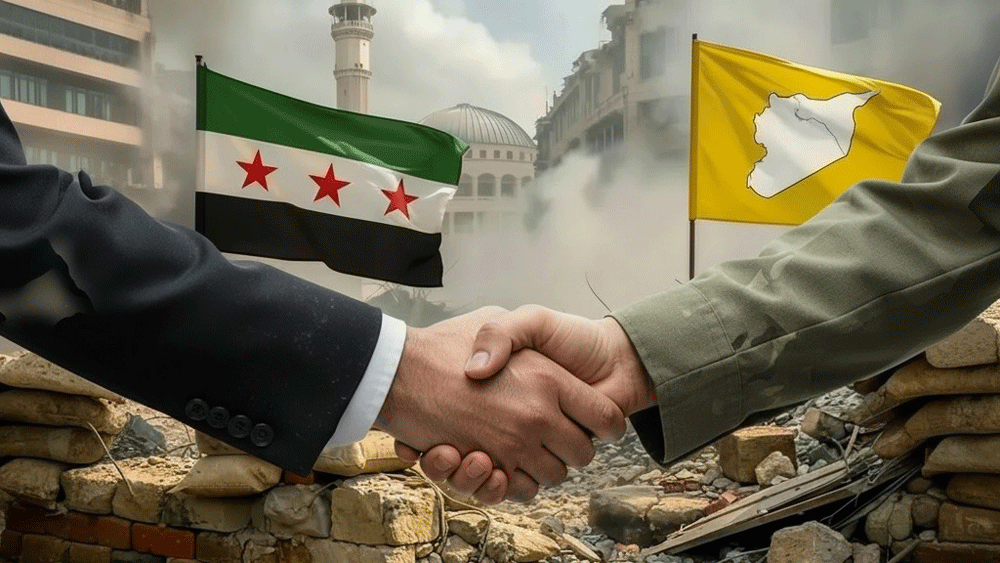
The Syrian government’s military advance on the positions of the Kurish-led Syrian Democratic Forces (SDF) to the east of Aleppo intensified rapidly on 17-18 January, resulting in the forced retreat of the SDF and the group's acceptance of a renewed ceasefire deal together with concessions to Damascus.
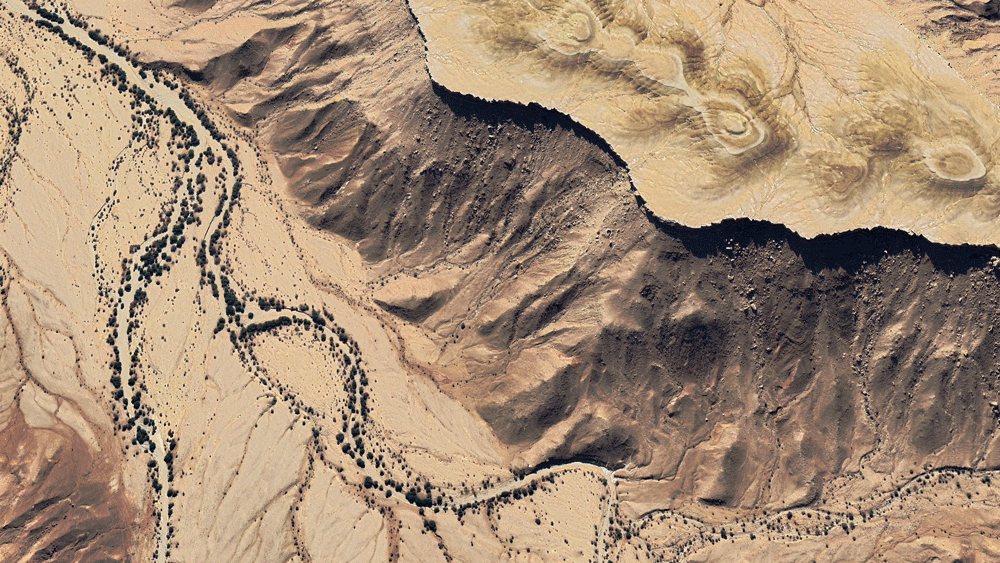
Under the terms, the SDF has now agreed to a 14-point deal with Damascus in which the Syrian government will take administrative control of all three remaining Syrian governorates currently held by the SDF: Raqqa, Deir Al-Zour and Hasakah.
Sudden collapse
The strategic situation unravelled quickly for the SDF on 17 January after four days of relatively little movement in the battle lines between government and SDF forces.
By the end of the day, government advances along three separate axes – one in eastern Aleppo and two in Raqqa Governorate – had forced a military withdrawal of SDF forces from all of its positions and the territory it had been administering west of the Euphrates.
Government forces also began shelling SDF position and deploying additional military forces in the eastern governorate of Deir Al-Zour, while tribal forces seized checkpoints.
By 18 January, the fighting had spilled over to the eastern bank of the Euphrates, both across the governorate of Deir Al-Zour and in the city of Raqqa, the capital of Raqqa Governorate and the former administration seat of the Islamic State.
As the SDF forces were pushed back, and local US military displays of force were seemingly ignored, US special envoy Tom Barrack flew into Damascus to mediate.
By early evening the same day, General Mazloum Abdi, commander-in-chief of the SDF, held a phone call with Syrian President Ahmed Al-Sharaa, in which a ceasefire was discussed. Foreign Minister Asaad Al-Shaibani then shared proposals with the SDF.
Later that same evening, the Syrian government confirmed that a ceasefire had been signed, with the Defence Ministry stating that a general standdown had been ordered.
Ceasefire terms
Damascus’ Information Minister Hamza Al-Mustafa shared the full agreement on X.
The two most significant terms of the 14-point agreement are the immediate and complete handover by the SDF to Damascus of the governorates of Deir Al-Zour and Raqqa, both administratively and militarily, as well as the administrative, but not military, handover of Al-Hasakah Governorate.
The deal therefore limits the future security role of the SDF to Al-Hasakah Governorate. Under the terms of the deal, all employees of civilian institutions and facilities under the current SDF civilian administration across all three governorates will remain in their positions.
As in the March 2025 deal, the agreement also commits the SDF personnel to integration into the Syrian army – on an individual, not unit basis – under the military chain of command of the Defence Ministry, while retaining their ranks, subject to vetting.
The agreement furthermore establishes Damascus’ full control over all borders and oil and gas fields in the region, as well as its administrative responsibility for detention facilities holding Islamic State prisoners, and other responsibilities.
The agreement also lays out Damascus’ commitment to recognising and enshrining Kurdish cultural and linguistic rights and addressing outstanding rights-based issues.
It likewise entails a commitment on the SDF’s part to expel non-Syrian Kurdistan Workers’ Party members from Syrian territory – in a nod to Ankara’s principal security concerns in the region and Damascus’ interest in resolving cross-border tensions.
Qatar and Turkiye’s foreign ministries have since both welcomed the signing of the ceasefire agreement and conveyed their hopes for the integration of the SDF with Damascus, in line with the provisions of the new agreement. Saudi Crown Prince Mohammed Bin Salman Al-Saud also held a personal phone call with Al-Sharaa on the ongoing developments.
By around midnight, General Abdi stated that the ceasefire had been signed “to stop the bloodshed and protect civilian lives”, while emphasising that the SDF will continue to “safeguard the special status of the region”.
On 19 January, there were still instances of sporadic fighting between groups affiliated with the Syrian government and the SDF. In one incident, fierce fighting broke out in the vicinity of Al-Aqtan prison in Raqqa, where high-risk prisoners, including Islamic State militants, are located – events at odds with the peaceful transition laid out in the ceasefire deal.
 READ THE JANUARY 2026 MEED BUSINESS REVIEW – click here to view PDF
Saudi Arabia courts real estate investment; EVs and battery production are key regional tech themes; Muscat holds a steady growth course despite headwinds
Distributed to senior decision-makers in the region and around the world, the January 2026 edition of MEED Business Review includes:
> AGENDA: Saudi real estate to surge in 2026 > BATTERIES: Batteries shape the region's energy future > INTERVIEW: Tabreed finishes the year on a high > CONTRACTORS: Managing risk in the GCC construction market > ECONOMIC ACTIVITY INDEX: UAE and Qatar emerge as markets to watch > AIRSHOW: Top deals signed at Dubai Airshow 2025 > MARKET FOCUS: Oman steadies growth with strategic restraint |
To see previous issues of MEED Business Review, please click here
You might also like...


A MEED Subscription...
Subscribe or upgrade your current MEED.com package to support your strategic planning with the MENA region’s best source of business information. Proceed to our online shop below to find out more about the features in each package.