


Fitch Ratings says global market oversupply should contain price increases and mitigate disruptions to Iranian exports
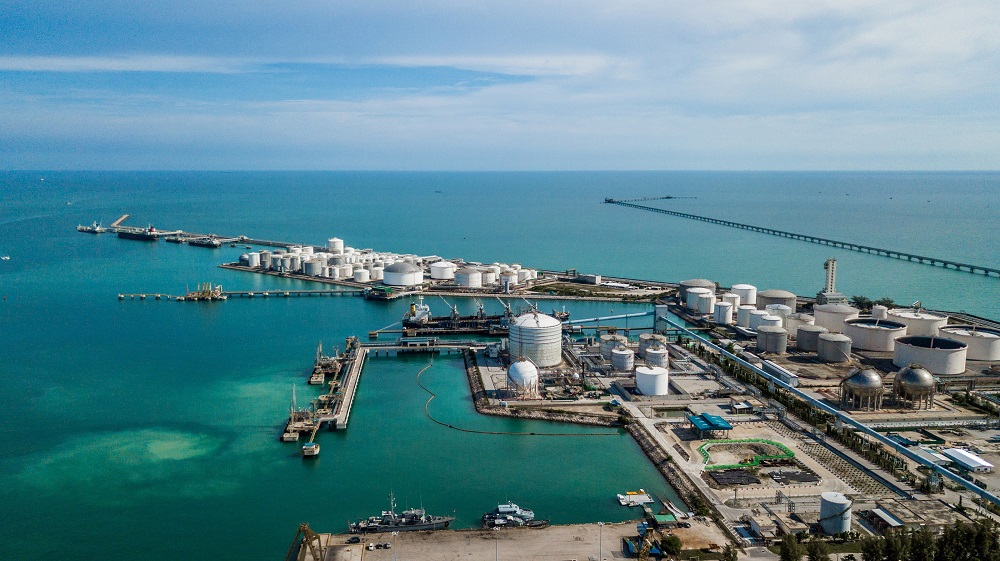
The de facto blockade of the Strait of Hormuz in the Gulf by Iran since 28 February is likely to be temporary given its vital economic role in global oil trade, according to credit ratings agency Fitch Ratings.
This, alongside global oil market oversupply, should limit oil price rises and mitigate any potential disruptions to Iranian oil supply, Fitch Ratings said in a note.
As a result, the ratings agency does not expect significant upside to its December 2025 assumption of an average Brent oil price of $63 a barrel for 2026.
“The strait is not formally closed, but vessels are increasingly avoiding it given the risk of attack by Iran or its proxies. Oil majors have halted shipments for safety reasons, and insurers are cancelling war risk cover for vessels. However, we expect this effective closure of the strait to be temporary. It is a vital artery for seaborne oil transportation, with limited alternative routes,” said Angelina Valavina, EMEA head of Natural Resources and Commodities at Fitch Ratings.
Oil prices rose on 5 March, extending a rally as the escalating US-Israeli war with Iran continued to disrupt supplies, prompting some major producers to cut production and others to take measures to ensure supply security.
Brent crude was up $2.35, or 2.9%, at $83.75 a barrel at 12pm Gulf Standard Time, a fifth session of gains. US West Texas Intermediate crude rose $2.42, or 3.2%, to $77.08.
ALSO READ: Oil prices rise to highest in a year as regional conflict deepens
“Prior to the conflict, around 20 million barrels a day (b/d) of crude oil and petroleum products transited the strait, accounting for about a quarter of global seaborne oil trade and a fifth of global oil consumption. About half of the oil volumes transported through the strait are exports from Saudi Arabia and the UAE, with the remainder from Iraq, Kuwait and Iran. About half of these exports go to China and India.
“A protracted closure would affect both exporting and importing countries and therefore is not our baseline assumption. If the strait were to remain effectively closed for a protracted period, naval protection for tanker navigation could be considered, as occurred during the 1980s' Iran-Iraq war,” Valavina said in the note from Fitch Ratings.
“In addition, the global oil market is oversupplied, which should limit the geopolitical risk premium and cap risks to oil price increases. Global supply growth exceeded demand growth in 2025. Fitch expects this trend to continue in 2026. Supply increased by about 3 million b/d in 2025, while demand grew by well below 1 million b/d,” Valavina said.
“We forecast supply growth of 2.4 million b/d in 2026, with demand growth of about 0.8 million b/d. Half of 2025-26 supply increases come from unaffected non-Opec+ producers. Opec+ spare production capacity is 4.3 million b/d,” she added.
“In addition, global observed oil inventories rose by 1.3 million b/d in 2025 to reach their highest level since March 2021. Total global inventories stood at 8.2 billion barrels at end-2025. This is sufficient to cover a halt in oil shipments via the Strait of Hormuz for over 400 days.
“Saudi Arabia and the UAE have some infrastructure to bypass the strait, which may mitigate transit disruptions. Saudi Aramco (Saudi Arabian Oil Company; A+/Stable) operates the 5 million b/d East–West crude oil pipeline to an export port on the Red Sea. The UAE operates a 1.5 million b/d capacity pipeline linking its oil fields to the Fujairah export terminal on the Gulf of Oman with a maximum achieved flow of 1.8 million b/d.
“While Iran is a sizeable oil producer, producing about 3.5 million b/d and exporting about 2 million b/d, it accounts only for about 3.5% of global crude oil production. This means that potential supply disruption would be offset by global market oversupply.”
Valavina concluded: “However, the duration and intensity of the increasingly regional conflict remain uncertain. Any protracted blockage of the strait or material and sustained damage to the region’s oil and gas production and transportation infrastructure would materially affect oil markets and likely result in a more material rise in our base case 2026 oil price assumption. Oil price volatility would rise if there were to be any material disruption to Iranian oil production.”
You might also like...

Executive briefing: US-Israel-Iran conflict
06 March 2026

UAE utilities say services stable amid tensions
06 March 2026

Drawn-out conflict may shift planning priorities
06 March 2026

A MEED Subscription...
Subscribe or upgrade your current MEED.com package to support your strategic planning with the MENA region’s best source of business information. Proceed to our online shop below to find out more about the features in each package.