

Plastic Energy points the way to circularity and its potential in the region’s plastics sector
The Gulf is no stranger to global leadership. From hosting Cop28 to backing multibillion-dollar renewable energy ventures, countries across the region have made it clear that sustainable development and economic diversification are not just policy ambitions; they are strategic priorities.
 The same thinking now needs to be applied to the plastics system.

Plastic is not the enemy. It is a high-performance material that underpins global supply chains, health systems, food security and industrial productivity. The issue is not plastic use, but plastic misuse and the lack of scalable systems to reuse it.
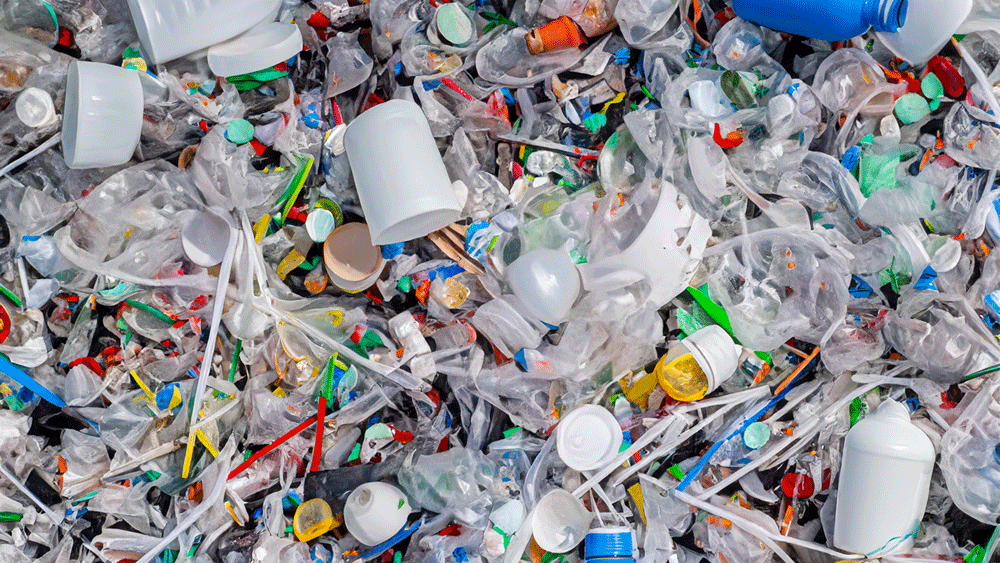
Across the Gulf region, more than 90% of plastic ends up in landfills or is burned in incinerators. That is not just environmentally damaging; it is economically irrational. We are throwing away a valuable resource and replacing it with virgin fossil inputs. In any other industry, this would be seen as bad business.
Plastic consumption is correlated with economic growth. As populations grow and consumption rises, plastic demand tends to increase rapidly, creating more waste. Several Gulf states already rank among the top 20 highest global producers of plastic waste per capita, and given the region’s economic expansion, this consumption is only likely to rise.
Circular potential
This is where opportunity lies. Gulf economies are already investing in circular economy policies. Saudi Arabia’s Vision 2030 targets a significant increase in waste-to-value activity. The UAE and Oman have introduced bans on certain single-use plastics and are exploring extended producer responsibility regimes.
The direction of travel is clear, but policy only gets you so far. The next step is investing in technology and infrastructure.
At Plastic Energy, we have developed a technology that takes hard-to-recycle, end-of-use plastics and uses pyrolysis to turn them into a recycled oil that can serve as a feedstock for new plastics. The resulting product (which we call “TACOIL”) then both displaces the need for virgin fossil inputs and avoids the emissions associated with incineration.
In doing so, this advanced recycling technique can deliver a carbon saving of up to 75% compared to simply incinerating the same material.
This is not theory. Our commercial-scale plants are already operating in Europe, and we are in the commissioning stage with our project in Geleen, The Netherlands, which we have been developing in partnership with Saudi Basic Industries Corporation (Sabic) to treat the flexible packaging and films that mechanical recyclers cannot process.
The resulting alternative feedstock will be fed into Sabic’s “TRUCIRCLE” line of circular polymers.
What makes the implementation of such technology especially relevant for the Gulf is that it is already compatible with the region’s existing industrial assets. No exotic refining models, no new value chain required; just integration with world-class refineries, centralised manufacturing zones and global export hubs.
In short, the Gulf does not need to reinvent itself to lead on circularity. It simply needs to extend its leadership in energy, industry and infrastructure into the realm of plastics.
Unlocking the upside
This is not about pointing fingers or hollowly highlighting problems; it is about building momentum for solutions and seizing the commercial and strategic upside that comes with them.
Plastic waste is not just a local nuisance; it is a stranded asset. Unlocking its value should be seen in the same light as unlocking stranded renewables: as an economic opportunity dressed up as an environmental challenge.
That opportunity is real. Global demand for recycled plastics is rising, driven by regulation, investor pressure and brand commitments. At the same time, the cost of inaction is growing. Markets are tightening, scrutiny is increasing, and expectations on traceability and recovery are only going one way.
What the Gulf chooses to do next will shape the region’s competitiveness in global materials markets. But the playbook already exists. The region has shown it can lead – not just through ambition, but through implementation.
From sovereign wealth funds investing in clean technology to industrial giants backing clean energy hubs, the region understands how to align policy, capital and infrastructure.
Plastic circularity deserves to be part of that conversation. Not because the region has a unique problem, but because it has a unique opportunity to help solve a global one – by deploying the right systems, at the right scale, in the right place.

You might also like...


A MEED Subscription...
Subscribe or upgrade your current MEED.com package to support your strategic planning with the MENA region’s best source of business information. Proceed to our online shop below to find out more about the features in each package.