
KEO is working to strengthen the Middle East’s infrastructure to ensure it is sustainable, efficient and future-ready
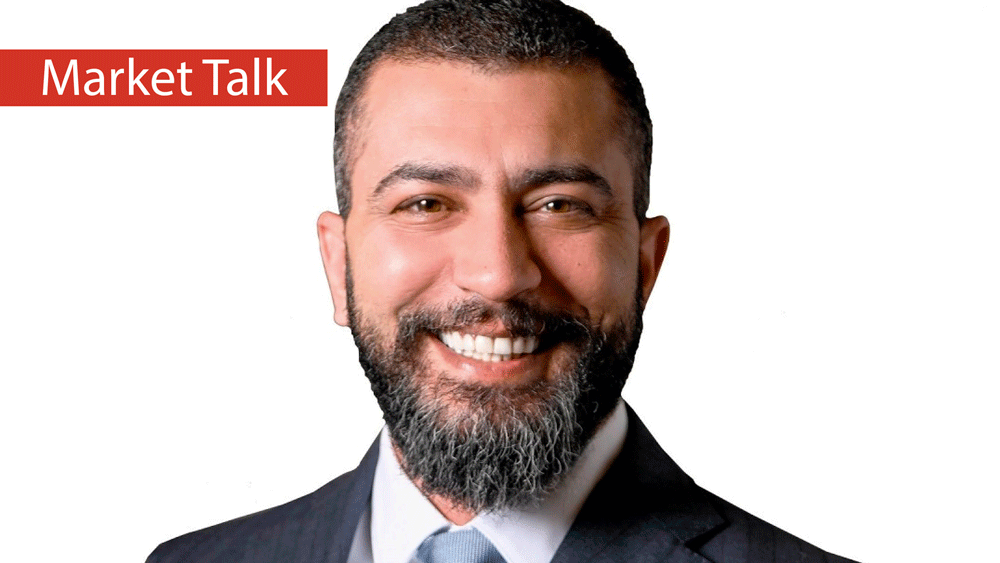
In conversation with Sameer Daoud, managing director of KEO Infrastructure
 What are the opportunities and trends in infrastructure development in the Middle East, and how are governments addressing the need for sustainable, resilient infrastructure?
The Middle East is undergoing a transformative shift in infrastructure development, driven by sustainability, digitalisation and economic diversification. Key opportunities lie in smart cities, renewable energy, advanced transportation and water security.
Governments are heavily investing in artificial intelligence (AI)-driven urban planning, green hydrogen projects, high-speed rail and smart water management solutions to enhance sustainability and resilience.
To achieve these goals, public-private partnerships (PPPs), regulatory reforms and climate adaptation strategies are
being prioritised. Initiatives such as Saudi Vision 2030 and UAE Centennial 2071 emphasise green financing, ESG standards and policy frameworks that attract investment while mitigating environmental risks. These strategies position the region as a global leader in future-ready infrastructure.
Infrastructure projects in the Middle East have a profound economic impact, fostering growth and diversification by reducing dependence on oil and strengthening key sectors such as renewable energy and digital infrastructure. Forecasts estimate $456.7bn in energy infrastructure investment across Mena from 2022 to 2026.[1] These projects generate employment, stimulate economic activity and enhance productivity by improving transportation networks, utilities and digital connectivity.
Beyond economic benefits, infrastructure development significantly improves quality of life and social stability by ensuring access to essential services such as clean water, reliable electricity, healthcare and education. Regional connectivity projects like Etihad Rail and high-speed rail networks further drive trade, economic integration and cross-border cooperation.
At KEO, we are proud to contribute to these advancements, shaping a more sustainable and resilient future for the region.
What challenges are faced when it comes to infrastructure development, and what innovations are being implemented to overcome them?
Infrastructure development in the Middle East faces several key challenges, including financial pressures, water scarcity, climate change, governance complexities and rapid urbanisation. However, by seizing opportunities and tackling challenges with innovative solutions, the region is set to become a global leader in sustainable and resilient infrastructure.
Smart city technologies, renewable energy investments, advanced water management systems and digital transformation are at the forefront of these efforts, alongside innovative funding strategies to support large-scale infrastructure projects.
To overcome financial pressures, governments are leveraging public-private partnerships (PPPs) to attract investment and accelerate project delivery. Water security remains a critical concern, prompting the adoption of advanced desalination, wastewater recycling and AI-driven water management systems. Climate change resilience is being strengthened through green building initiatives, renewable energy integration and climate-adaptive urban planning.
Digital transformation is playing a crucial role in tackling governance and urbanisation challenges. Smart city technologies, automated infrastructure management and AI-driven urban planning are enhancing efficiency and sustainability. Investments in high-speed rail, smart transportation networks and next-generation utilities are also improving connectivity and resilience.
By embracing these innovations, the region is strengthening its infrastructure to be more sustainable, efficient and future-ready.
What are the top priorities for infrastructure development in the Middle East in the coming years, and how important is the role of private sector investment in achieving government objectives?
In the coming years, infrastructure development in the Middle East will focus on renewable energy, smart cities, digital transformation, resilient utilities, transportation networks, sustainable construction, water security, tourism, cultural projects, healthcare and education. Countries are investing in large-scale solar, wind and green hydrogen projects, alongside smart cities integrating Internet of Things and sustainable design. Digital infrastructure upgrades will enhance traffic management and automated public services, while major transportation projects like Etihad Rail will strengthen regional connectivity.
Sustainability remains central, with regulatory reforms promoting climate-resilient designs and green building practices. Addressing water scarcity through desalination and recycling is a priority, as reflected in the UAE’s Water Security Strategy 2036. Tourism infrastructure is also expanding, with projects like Saudi Arabia’s Red Sea Development and Dubai’s luxury developments enhancing economic diversification. Investments in healthcare and education aim to improve quality of life and attract global talent, further positioning the region as a hub for innovation and sustainable growth.
Private sector investment is critical in achieving these infrastructure goals, easing financial burdens on governments while introducing innovative project delivery approaches.
In Saudi Arabia, the Public Investment Fund (PIF) is collaborating with Goldman Sachs to create funds targeting private credit and public equity strategies in the region. This partnership aims to attract global investors and support domestic projects, aligning with Crown Prince Mohammed Bin Salman's vision to diversify and grow the Saudi economy through new industries and large-scale infrastructure projects.
Similarly, Turkey has signed a memorandum of understanding with the Asian Infrastructure Investment Bank (AIIB) for $5bn in financing for public sector projects, focusing on sustainable and green development.
Gigaprojects such as Neom in Saudi Arabia and megaprojects like Dubai Creek Harbour showcase the transformative impact of infrastructure on long-term sustainability. Neom, a futuristic smart city powered by renewable energy, aims to be a global innovation hub, while Dubai Creek Harbour, designed as a city within a city, aims to enhance urban living by integrating advanced master planning, smart technologies and efficient waste management systems.
By leveraging private capital and expertise, Middle Eastern governments can accelerate infrastructure development, improve public services and ensure the region remains at the forefront of global progress.
[1] Statista Research Department, Feb 27
Published in partnership with

You might also like...
UAE bank asset quality hinges on property market
03 April 2026
Safety and security matters
03 April 2026
Saudi forecast remains one of growth
03 April 2026
A MEED Subscription...
Subscribe or upgrade your current MEED.com package to support your strategic planning with the MENA region’s best source of business information. Proceed to our online shop below to find out more about the features in each package.