


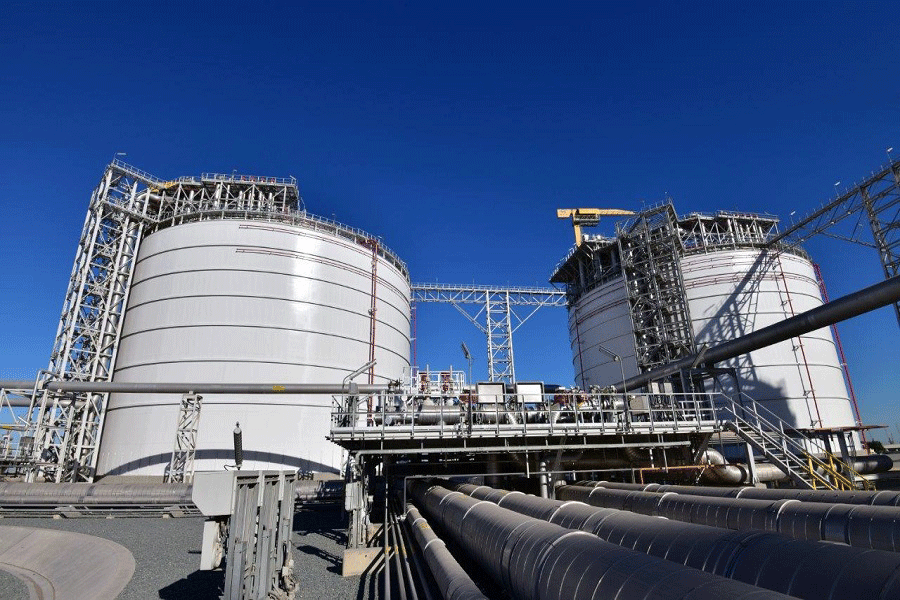
Downstream units have sustained significant material damage
State-owned Kuwait Petroleum Corporation (KPC) has said that some units have sustained significant damage following Iranian strikes on oil and gas infrastructure in recent days.
Strikes hit facilities operated by its subsidiaries Petrochemical Industries Company (PIC) and Kuwait National Petroleum Company (KNPC).
Strikes also hit the offices of KPC and the Oil Ministry, as well as power and water desalination plants.
In a statement released on 5 April, KPC said: “On 5 April, 2026, the oil sector complex located in Shuwaikh, which houses the KPC building and the Ministry of Oil, was attacked by drones, resulting in a fire at the building and significant material damage.
“Several operational facilities belonging to the corporation, both at KNPC [sites] and PIC [sites], were also subjected to similar drone attacks, leading to fires at a number of these facilities, and causing significant material damage.
“Emergency and firefighting teams from the concerned companies, with the support of the General Fire Force, implemented the approved response plans.
“The teams continue to work to control the fires and prevent their spread to adjacent facilities.
“The corporation confirmed, thanks be to God, that no human casualties were recorded as a result of these attacks.”
In a television address, Hisham Ahmed Al-Rifai, a spokesperson for the company, said that the offices of KPC and the Oil Ministry were targeted at dawn on 5 April.
He called the attack “reprehensible” and said that Iran used drones to carry it out.
Al-Rifai said that KPC is still assessing damage to the office building and to the PIC and KNPC facilities.
The past few days have seen significant damage dealt to a range of oil and gas infrastructure.
On 3 April, early-morning strikes hit Kuwait’s Al-Ahmadi oil refinery, causing fires in a “number of operational units”.
The strikes on 3 April were the third time that the refinery had been hit since the regional conflict started.
The refining facility is one of the largest in the Middle East and is an important source of refined products for both the domestic market and exports.
 READ THE APRIL 2026 MEED BUSINESS REVIEW – click here to view PDF
Economic shock threatens long-term outlook; Riyadh adjusts to fiscal and geopolitical risk; GCC contractor ranking reflects gigaprojects slowdown.
Distributed to senior decision-makers in the region and around the world, the April 2026 edition of MEED Business Review includes:
> AGENDA: Gulf economies under fire > GCC CONTRACTOR RANKING: Construction guard undergoes a shift > MARKET FOCUS: Risk accelerates Saudi spending shift > QATAR LNG: Qatar’s new $8bn investment heats up global LNG race > LEADERSHIP: Shaping the future of passenger rail in the Middle East |
To see previous issues of MEED Business Review, please click here

You might also like...


A MEED Subscription...
Subscribe or upgrade your current MEED.com package to support your strategic planning with the MENA region’s best source of business information. Proceed to our online shop below to find out more about the features in each package.