
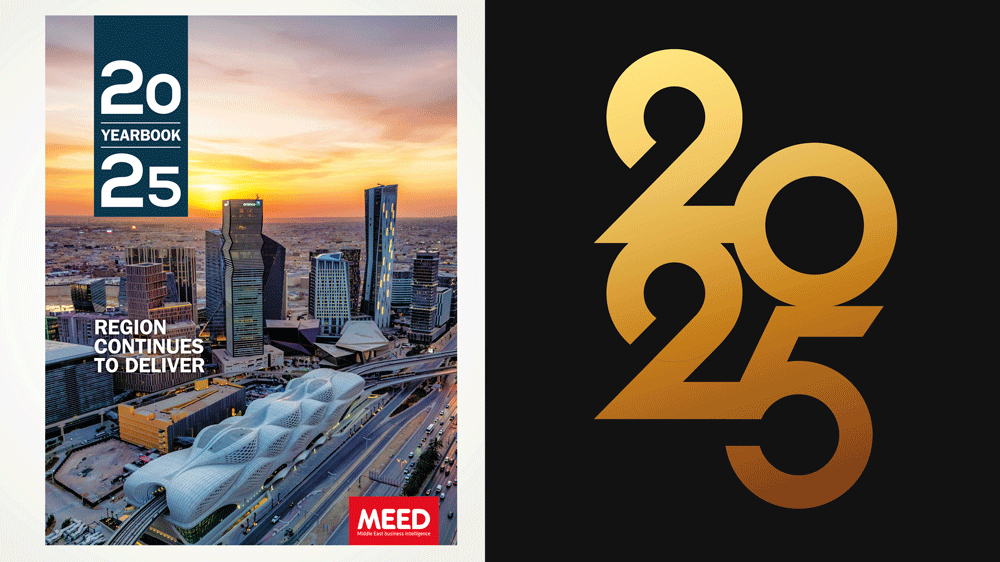
MEED’s 16th highly prized flagship Yearbook publication is available to read
Yearbook 2025: CLICK HERE TO READ THE ISSUE
 Commentary
Colin Foreman
Editor
It was more of the same in 2024. Project activity remained at record levels across the region, and by the end of October, the total value of contract awards looked poised to beat 2023’s full-year total by the end of the year.
The heightened levels of contract awards are testing the market. Globally, supply chain pressures, although somewhat eased compared to the aftermath of the Covid-19 pandemic, remain stretched, and interest rates, while cooled slightly, mean borrowing is expensive.
In the region, the order books of contractors and their suppliers are full, and project developers now admit they are operating in a sellers’ market.
These pressures combined have meant that, while 2024 might be another record year for project activity, the growth has plateaued compared to the sharp increase in contract award activity experienced in 2022-23.
While the performance will vary across different market segments, maintaining the pace of contract awards is a significant challenge and will remain so in 2025.
Looking ahead, the geopolitical and macroeconomic backdrop is a concern. Donald Trump will enter the White House in January for another four years, and his unpredictable style will make it difficult for the global economy to anticipate what will come next.
Oil prices will be watched closely. The outlook for demand has weakened, Opec+ production cuts are due to expire and the Trump administration is expected to boost US production, which may mean lower prices. Should this happen, governments in the key oil-exporting markets of the Gulf will have less money to invest in projects.
While uncertainty is always a concern, the region has become adept at coping with challenges. This resilience has been enhanced recently by a greater sense of togetherness. Within the GCC, cooperation on projects and investments is growing, and across the broader region, long-standing political tensions have eased, most noticeably Saudi Arabia’s relationship with Iran.
Regional unity combined with the momentum markets have generated over the past two years means the outlook for 2025 remains positive, while the strong pipeline of projects to be tendered and awarded will bring its own challenges.
Published on 31 December 2024 and distributed to senior decision-makers in the region and around the world, the MEED Yearbook 2025 includes:
> PROJECTS: Another bumper year for Mena projects > GIGAPROJECTS INDEX: Gigaproject spending finds a level > INFRASTRUCTURE: Dubai focuses on infrastructure > US POLITICS: Donald Trump’s win presages shake-up of global politics > REGIONAL ALLIANCES: Middle East’s evolving alliances continue to shift > DOWNSTREAM: Regional downstream sector prepares for consolidation > CONSTRUCTION: Bigger is better for construction > TRANSPORT: Transport projects driven by key trends > PROJECTS: Gulf projects index continues ascension > CONTRACTS: Mena projects market set to break records in 2024 |
The MEED Yearbook 2025 country data files include:
|
|

You might also like...

UAE's e& exits Vodafone in $5.95bn share sale
10 July 2026
Projects market holds its nerve
10 July 2026
Malaysian contractor wins $227m Abu Dhabi project
10 July 2026

A MEED Subscription...
Subscribe or upgrade your current MEED.com package to support your strategic planning with the MENA region’s best source of business information. Proceed to our online shop below to find out more about the features in each package.