


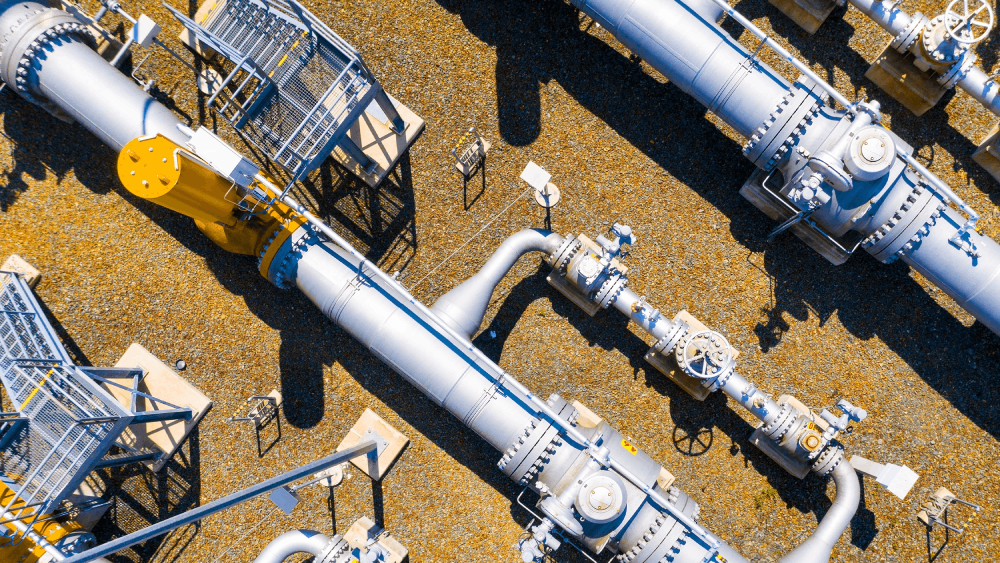
The impacts of the conflict are likely to impact production for months or years
 Commentary
Wil Crisp
Oil & gas reporter
The US and Israel’s ongoing war on Iran is taking a rising toll on Kuwait’s oil sector, which is likely to be felt for years, even if the war concludes relatively quickly.
The effective closure of the Strait of Hormuz to shipping has meant that Kuwaiti oil exports have completely stopped, forcing the country to declare force majeure last month.
The inability to export oil has led storage facilities to reach maximum capacity and forced Kuwait to stop production completely at key oil fields.
Resuming production from these assets is not likely to be easy, and production from these fields could take months to ramp up to normal levels even if shipping is allowed to cross the Strait of Hormuz freely.
The blockage in the Strait of Hormuz has also prevented Kuwaitis from importing equipment and materials to carry out maintenance work or projects in the oil and gas sector.
On top of the severe negative impacts caused by the disruption to shipping through the Strait of Hormuz, the country’s energy sector is seeing increasing damage to oil and gas facilities from Iranian strikes.
Over the past few days, a wide range of Kuwaiti oil and gas infrastructure has been hit and damaged.
This includes strikes on Kuwait’s Al-Ahmadi oil refinery, one of the biggest in the Middle East, which was attacked on 5 April, causing fires in a “number of operational units”.
If future operations at the refinery are limited by damage to the facility, it could potentially lead to much lower volumes of refined products being available both on the domestic market and for export.
On 5 April, Iran also struck facilities operated by Petrochemical Industries Company (PIC) and Kuwait National Petroleum Company (KNPC), both subsidiaries of state-owned Kuwait Petroleum Corporation (KPC).
On the same day, the building that houses the headquarters of KPC and the country’s Oil Ministry was also hit, causing a fire.
In a statement released on 5 April, KPC said that assessments of the damage to the office building, as well as to the PIC and KNPC facilities, were ongoing.
If the damage to the PIC and KNPC facilities is significant, it could further reduce Kuwait’s refining capacity and erode the country’s petrochemical production capacity.
This, in turn, would negatively impact the oil and gas sector’s ability to generate future revenues.
As the war continues, it is likely that damage to oil and gas infrastructure will continue to mount, further eroding the country’s ability to return quickly to normal operations.
You might also like...

UAE's e& exits Vodafone in $5.95bn share sale
10 July 2026

Projects market holds its nerve
10 July 2026

Malaysian contractor wins $227m Abu Dhabi project
10 July 2026

A MEED Subscription...
Subscribe or upgrade your current MEED.com package to support your strategic planning with the MENA region’s best source of business information. Proceed to our online shop below to find out more about the features in each package.