


Libya and Algeria are expected to push for higher production amid higher prices


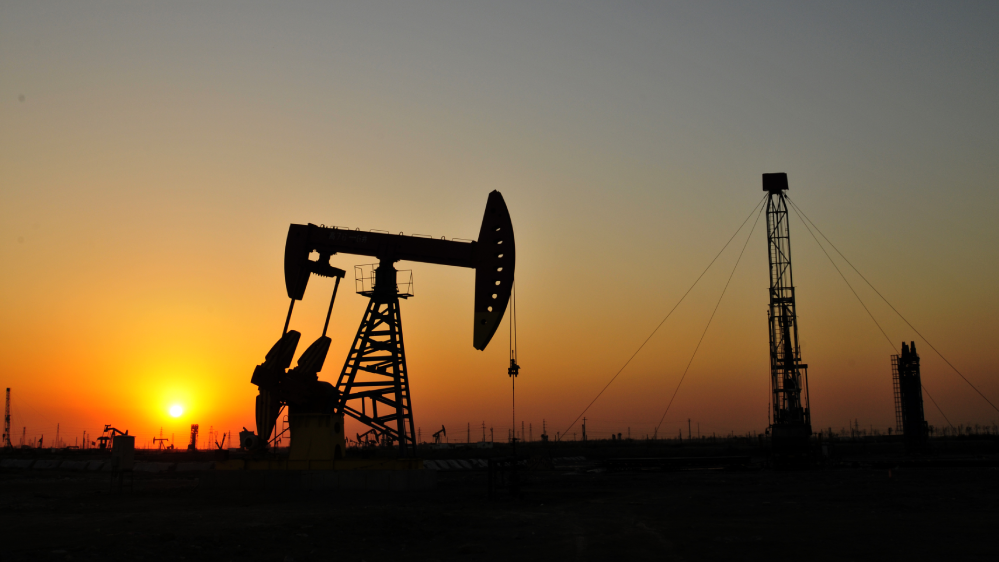
The US and Israel’s ongoing war with Iran is likely to boost oil and gas project activity in North Africa, as the high-price environment encourages the region’s national oil companies to push ahead with projects that will allow them to increase exports.
In recent weeks, international oil and gas prices have stayed consistently far higher than levels seen before the US and Israel launched their attack on Iran on 28 February, killing Iran’s Supreme Leader, Ali Khamenei.
For the past two weeks, the price of Brent crude has remained above $90 a barrel and has hit a high of more than $109.
Similarly, the Dutch TTF natural gas benchmark has stayed above €45 per megawatt hour and hit a high of more than €62, up from €31 prior to the 28 February attack.
Gulf disruption
Over the same period, the long-term outlook for oil and gas exports from the GCC and Iraq has dimmed significantly as disruption to transport through the Strait of Hormuz has continued and damage to key regional oil and gas infrastructure has increased.
Damage to infrastructure has included attacks on oil and gas fields, as well as strikes on oil refineries, storage facilities and gas processing plants.
This damage means that even if the disruption to the transport of oil and gas via the strait ends quickly, the war will have a long-term impact on oil and gas production and exports in the GCC and Iraq.
On 18 March, Saad Sherida Al-Kaabi, QatarEnergy’s CEO and minister of state for energy affairs, said Iranian strikes on Ras Laffan Industrial City – home to the world’s largest liquefied natural gas (LNG) production and export facility – had knocked out about 17% of its LNG export capacity.
He said the attacks were expected to cause an estimated $20bn in lost annual revenue and that repairs could take three to five years to complete.
In Bahrain, the Sitra oil refinery, which has a throughput capacity of 405,000 barrels a day (b/d), has been attacked and damaged, leading Bapco to declare force majeure.
Strikes also hit the Ras Tanura refinery in Saudi Arabia, as well as the Habshan gas processing complex in the UAE.
North Africa
The high-price environment and the long-term impact of the ongoing conflict represent an opportunity for North Africa’s oil-producing nations, especially the region’s biggest oil and gas exporters: Algeria and Libya.
Higher prices will dramatically increase government revenues for these countries, giving them more capacity to invest in infrastructure projects, while also providing a significant financial incentive to boost production in the short term.
Both Algeria and Libya are close to European markets that have relied on oil and gas from the GCC and Iraq, and neither country relies on the Strait of Hormuz to transport exports.
The two countries also appear to be seeking to accelerate oil and gas projects at a time of heightened demand from energy-importing nations to secure reliable supplies.
Libya push
Earlier this month, MEED revealed that talks were under way at Libya’s National Oil Corporation (NOC) to potentially launch a new licensing round to award some of the unawarded exploration blocks from the 2025 licensing round.
In the downstream sector, Libya also seems to be pushing to progress projects.
Recently, US-based KBR was awarded a contract by Zallaf Exploration, Production & Refining of Oil & Gas Company to provide project management and technical services for the South Refinery Project in Libya’s southern city of Ubari.
Algeria drive
Algeria is also advancing projects in the country’s oil and gas sector.
On 8 March, Algeria’s president signed a decree ratifying the development agreement for a $5.4bn oil and gas project in the country’s Illizi South block.
The decree approved a contract signed in Algiers on 13 October 2025 between Algeria’s national oil and gas company Sonatrach and Saudi Arabia’s Midad Energy North Africa.
The contract granted both companies the rights to explore and exploit hydrocarbons in the Illizi South area.
The total investment of about $5.4bn will be fully financed by Midad Energy, including approximately $288m allocated to the exploration phase.
Amid disruption to global LNG supplies from Qatar, Italy and Spain are currently in talks with Algeria in an effort to secure increased LNG shipments from the North African country.
Algeria’s prime minister has also received requests from Asian countries, including Vietnam, seeking to secure both gas and oil shipments.
It is unclear how much spare capacity Algeria has to supply LNG to new customers, as much of the country’s production is sold in advance under long-term supply agreements.
However, current market conditions are still expected to increase the country’s revenues significantly, as Algiers is likely to be able to command much higher prices in any new agreements.
While the ongoing war is expected to deepen the crisis for many companies operating in the GCC and Iraq oil and gas sector, the opposite could be true for companies established in Libya and Algeria.
Although in recent years these two countries have been viewed as having more challenging business environments than the UAE or Saudi Arabia, companies that have invested in building positions in North Africa’s oil- and gas-exporting states could be well placed to make windfall profits.
You might also like...
Gulf aviation ambitions face uncertain future
26 June 2026
Abu Dhabi announces Dar Al-Funoon Saadiyat project
26 June 2026

A MEED Subscription...
Subscribe or upgrade your current MEED.com package to support your strategic planning with the MENA region’s best source of business information. Proceed to our online shop below to find out more about the features in each package.