


Baghdad is taking bold steps on emissions and renewables, but more capacity building is required, according to US engineering consultancy KBR
In 2024, Iraq stands poised to rebuild and revitalise its energy infrastructure. It is also embracing a vision that balances the crucial role of hydrocarbons in its economy with the imperative of reducing emissions.
Central to this endeavour is the careful consideration of what is best for Iraq’s people and its economy, and how to best chart a path towards a more sustainable and prosperous future.
After enduring decades of challenges, it is paramount to ensure that every decision made serves to uplift and empower the Iraqi people.
Progressing the energy transition
The restoration of oil and gas assets has played a huge role in the economic recovery of Iraq and today the sector represents over 90% of its GDP.
As the main source of government revenue, it is responsible for supporting the operation of all of Iraq’s critical infrastructure, from dams and power stations to schools and hospitals.
Yet the Iraqi government also recognises the need to decarbonise and has targeted dramatic reductions in emissions levels by 2030.
The elimination of gas flaring is central to these ambitions, as it can prevent large volumes of the major greenhouse methane from being vented into the atmosphere. The Iraqi government aims to reduce such emissions by 30% by 2030, and its and pursuit of this target has led to notable work.
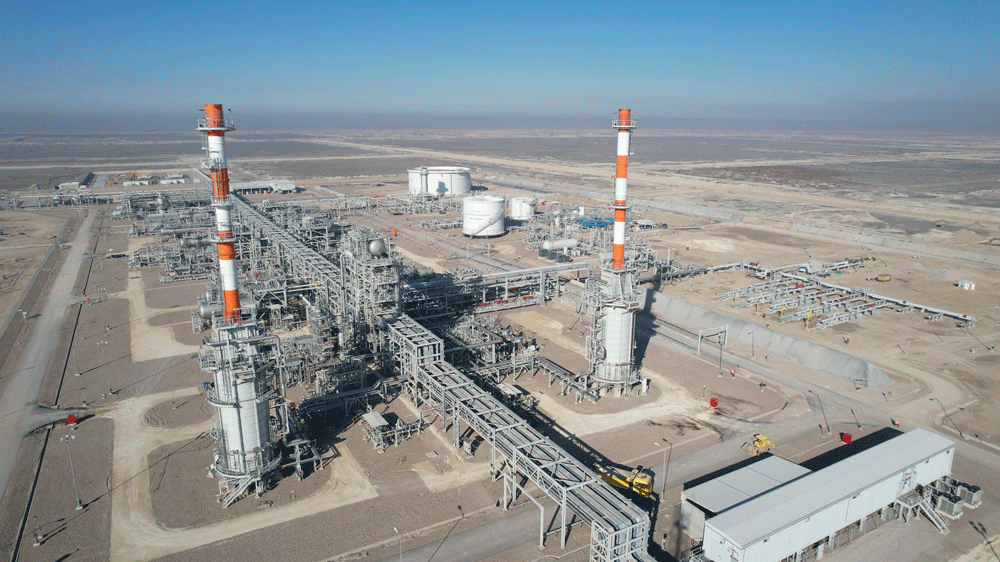
This includes a project at the Rumaila Field where targets have been set to bring carbon emissions from gas flaring to below 100 million standard cubic feet per day by 2025.
Instead of flaring, this gas can be gathered and processed so that it is suitable to be sold on or injected into oil reservoirs to raise the pressure for extraction.
The country is also making strong headway in renewables – something that was highlighted last year when the EU and Iraq signing a joint declaration that will see the two parties “deepen and intensify cooperation” on sustainable development and the green energy transition.
Iraq has stated it intends to generate around 25% of its energy from green sources by 2030 – around 12 Gigawatts in total – and in 2022 made $750m in low interest loans available to fund solar initiatives.
An increase in renewable power will also be crucial in driving growth in green hydrogen and ammonia production, which Iraq aims to raise to 800 tonnes of green hydrogen a year by 2030.
The economic benefits of these projects are substantial, as they can help Iraq diversify its economy, create new revenue streams and make effective use of its abundant renewable natural resources.
Empowering local talent
It is critical that the positive work on Iraq’s energy infrastructure must be done in a way that provides sustainable skills for local people, while also making good use of subject matter expertise from other countries. This should be done in a way that helps to pass on knowledge and skills.
KBR has been supporting the development of Iraq since the early 1970s and has been able to make a significant impact in developing a skilled local workforce.
Its team in the country is composed of 50% Iraqi nationals who are being transferred skills in areas such as emissions reduction, gas monetisation and green ammonia production.
The Majnoon oilfield project is one example of a KBR operation where the firm has prioritised the use of the local workforce, awarding contracts to local construction companies and employing Iraqi nationals in senior field and site management positions, as well as a wide array of engineering positions.
Striking the right balance
While Iraq is blessed with both hydrocarbons and renewable energy resources, its path to restoring infrastructure and progressing its energy transition will need expertise and technology from beyond its borders.
The critical role oil and gas plays in its economy means a carefully balanced path forward must be found, with the elimination of gas flaring and reduction in methane emissions coming as a necessary first step.
Beyond this, the country is establishing a promising approach to green hydrogen and ammonia production that can not only help to further minimise carbon emissions, but also reduce its economic reliance on hydrocarbons.
Collaboration with experienced international companies will be key to ensure Iraq’s ambitions – but this collaboration must respect the need to nurture local talent, grow Iraq’s skills base and allow it to become more independent as new projects are announced and implemented.

You might also like...




A MEED Subscription...
Subscribe or upgrade your current MEED.com package to support your strategic planning with the MENA region’s best source of business information. Proceed to our online shop below to find out more about the features in each package.