

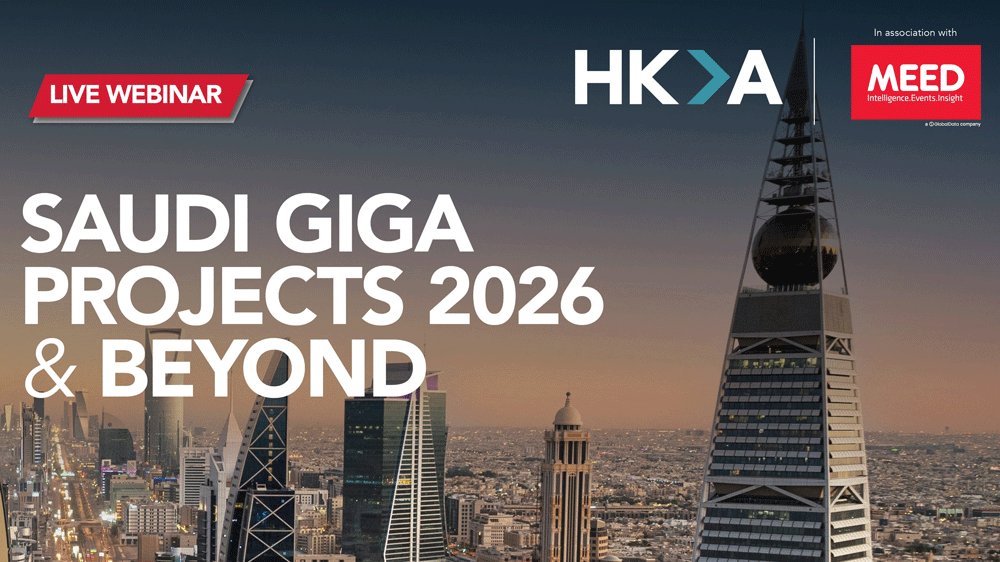
In this webinar, MEED and HKA unpack major pipeline trends, finance shifts and the practical realities of contractual risk management in one of the world’s most active projects markets
Construction projects in the region are navigating a period of profound transformation, as the market shifts from record-breaking levels of activity to a more complex environment shaped by regional volatility.
While the ambition driving the national economic visions remains the primary engine of growth for the region, the emergence of conflicts has introduced new variables that require a shift in how contractors and employers manage risk.
Despite these challenges, the industry’s core remains intact, characterised by a commitment to seeing projects through to completion.

“This region has always been about delivery; there is a delivery mindset throughout the region, and while there are challenges and situations where we’re in uncharted territory, that delivery mindset has absolutely continued,” said Haroon Niazi, partner and head of construction claims and expert, EMEA at HKA.
The region’s resilience is being tested by logistical pressures stemming from the recent closure of the Strait of Hormuz, which has led to the sudden redirection of freight and significant delays in the arrival of long-lead items.
Another pressing challenge for project delivery involves the limitations of existing insurance coverage. Many standard contractor-all-risk and logistics policies do not provide protection for situations arising from active conflict, creating a gap in risk mitigation for goods in transit. As freight is redirected to alternative ports, often further away from the project site, the subsequent need for long-distance road haulage is met with reluctance from insurers to provide cover.
To successfully recover costs associated with these disruptions, contractors must move away from traditional, less precise methods of claim submission. “What we’re advising our clients is to be very specific and very precise in ensuring that the different heads of claim and costs are arising separately, whether it’s increased supply chain costs or stoppages on-site,” said Niazi.
The necessity for real-time data capture has never been higher, as contemporary records are the only reliable way to substantiate losses involving demobilisation, remobilisation, or the implementation of new health and safety protocols, such as “shelter in place” requirements for workers.
Proving a direct causal link between the conflict and specific project delays is crucial. Statistics indicate that the average project delay in the region exceeds 60%, with figures in Saudi Arabia often rising above 80%. Given this context, employers are unlikely to accept broad claims that do not clearly isolate conflict-related impacts from pre-existing issues.
“The region loves global claims where contractors will just lump costs together, but there is really going to be a need for that discipline around record-keeping to ensure that conflict-related costs are carefully kept,” said Niazi.
You might also like...

UAE's e& exits Vodafone in $5.95bn share sale
10 July 2026

Projects market holds its nerve
10 July 2026

Malaysian contractor wins $227m Abu Dhabi project
10 July 2026

A MEED Subscription...
Subscribe or upgrade your current MEED.com package to support your strategic planning with the MENA region’s best source of business information. Proceed to our online shop below to find out more about the features in each package.