

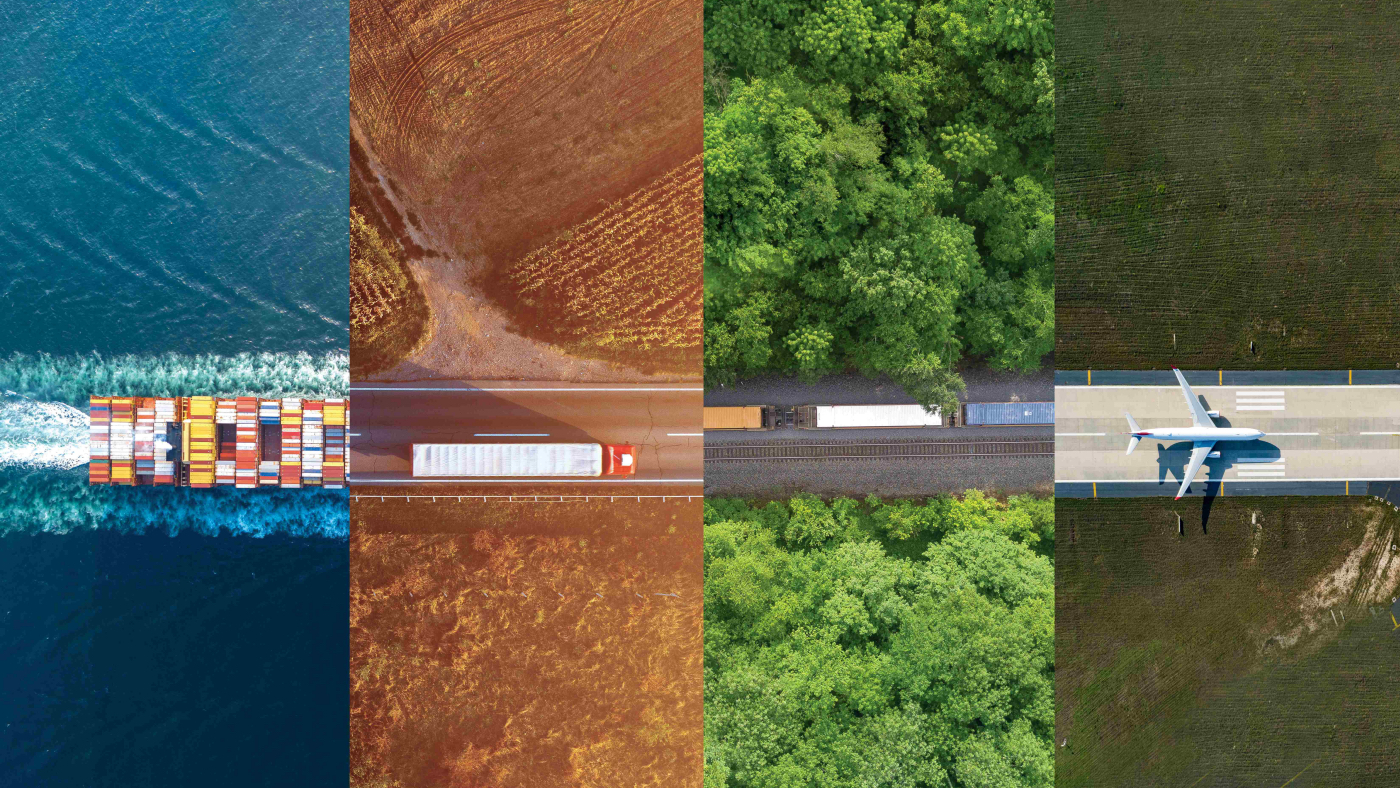
Amid global shipping disruptions and shifting trade routes, Dubai’s multimodal connectivity helps to reduce risks and keep goods moving


Global trade is under pressure. Tariff wars, protectionism and shippers’ reluctance to return to routes through the Red Sea pose an important question: how can businesses and industries build resilience in a world where disruption is the new normal?

 The ripple effects of recent disruptions are clear. Spurred by tension in the Red Sea, ships between Europe and Asia were forced to reroute around South Africa’s Cape of Good Hope, adding an extra 4,000 miles and 15 days to their journeys. Since late 2023, over 6,600 ships have bypassed the Suez Canal in favour of this longer route, to lower their risk exposure.
In fact, traffic in the canal fell to its lowest point in more than a decade in May, with fewer than 100 ships making the transit.
In parallel, weekly Chinese freight vessel arrivals to Southern Californian ports dropped by nearly 44% year-on-year for the first full week of May, before rebounding in June during a tariff rollback, as shippers took advantage of a window of opportunity.
Dubai hub
In this period of rapid change, many have turned to Dubai. The city’s hybrid sea-air logistics model, and its ability to adapt and pivot, is helping businesses bypass delays and maintain continuity.
For instance, goods from across Asia are arriving at Jebel Ali Port and being flown to Europe via Dubai airports, saving time and avoiding bottlenecks.
This did not happen overnight. The UAE has made significant investments in developing its logistics sector as part of a broader strategy to pivot away from oil dependency. Its freight and logistics market, as of 2024, was valued at $20bn. It is projected to reach $28bn by 2029.
As multimodal infrastructure expands, third-party logistics providers will have an even greater role to play
Dubai sits at the centre of this transformation. The government’s investments in infrastructure such as the Dubai Logistics Corridor, connecting Jebel Ali Port to Al-Maktoum International airport, cut sea-air transfer times from four hours to under one, quadrupling the city’s logistics efficiency and highlighting its strategic position as a bridge between the East and West.
With plans to establish more than 400 new trade corridors with cities across Africa, Latin America and Southeast Asia, the opportunity is significant.
These developments are set to accelerate with the launch of the Emirates Council for Logistics Integration, along with recently announced plans to increase the value of the logistics sector to AED200bn ($54.45bn) annually within the next seven years.
Overcoming disruptions
The bigger question now is how the private sector can tap into this opportunity to build resilience and keep international trade flowing. The hybrid sea-air model has been a lifeline for businesses in the past year.
For example, during the Red Sea disruptions, we managed to reroute over 2,000 metric tons of shipments from Asia to Europe for a European fast-fashion brand, along with finished garments and medicines from factories in Pakistan and India to the US, significantly reducing transit times and emissions by deploying an end-to-end sea-air solution.
In today’s supply chain landscape, the flexibility that this multimodal approach brings delivers a huge competitive advantage.
Multimodal growth
As multimodal infrastructure expands, third-party logistics providers will have an even greater role to play in keeping trade flowing and building risk-proof supply chains.
Port-centric logistics capabilities that integrate warehousing, distribution and value-added services directly with port facilities will be vital in helping businesses to navigate border complexities.
With innovations like Etihad Rail around the corner, it is also time to seriously consider the potential of rail networks in fostering regional trade and building resilience. For example, in 2023, we launched Sustainable, Assured, Reliable and Agile Logistics (Saral) in India, a rail freight service providing door-to-door cargo solutions and connecting businesses in the country’s west to markets in the north.
With over 65 trains, more than 14,000 containers and seven rail-linked private freight terminals, the rail network connects the hinterlands to commercial hubs as well as major ports, establishing an on-demand, multimodal network that enhances the efficiency of cargo movement.
Last year, we expanded this to improve north-south connectivity in the country, featuring a daily rail freight service with a capacity of 500 20-foot equivalent units (TEUs) a week. A similar focus on rail services could unlock resilience and flexibility for the GCC’s evolving infrastructure.
But the biggest challenge in multimodal logistics remains the lack of real-time tracking across modes. Cargo information is often scattered across several platforms, requiring businesses to access various systems to piece together a shipment’s status.
Our logistics platforms are addressing this gap by offering real-time visibility of multimodal shipments from origin to destination and facilitating seamless integration between sea and air routes via Jebel Ali Port and Dubai airports, mitigating delays and providing customers with the insights they need to adapt their operations on the fly.
As climate change accelerates and geopolitical uncertainty grows, the future of trade lies in reimagining supply chains. Agility, innovation and sustainability must be at the core of this transformation, so Dubai can continue to build a foundation of sustainable growth for its trade and logistics sector.
About the author
Abdulla Bin Damithan is CEO and managing director of DP World GCC
You might also like...

A MEED Subscription...
Subscribe or upgrade your current MEED.com package to support your strategic planning with the MENA region’s best source of business information. Proceed to our online shop below to find out more about the features in each package.