


Michael Nielsen, regional sales director for India, Central Asia, Middle East and Africa at Grundfos, discusses why efficient pumps are a game changer for water systems
The Middle East is approaching a critical juncture as it confronts the escalating challenges of climate change and water scarcity. Seven out of the world’s 10 most water-stressed countries are in this region, where limited freshwater resources meet high energy demands. This makes the case for sustainable, energy-efficient water management more pressing than ever.
The UAE and its Gulf neighbours are focusing on the dual priorities of rapid urbanisation and economic diversification while ensuring environmental stewardship.
Historically, the Middle East has lagged behind other regions such as Asia and Africa in adopting renewable energy, but progress is underway. With nearly 40% of the region’s electricity consumed by a growing residential sector and the ever-increasing need for freshwater via desalination, the urgency to merge energy efficiency with water conservation is clear.

Advanced, energy-efficient water pumping technologies are a key component of achieving these goals, ensuring long-term economic and environmental resilience.
The desalination dilemma
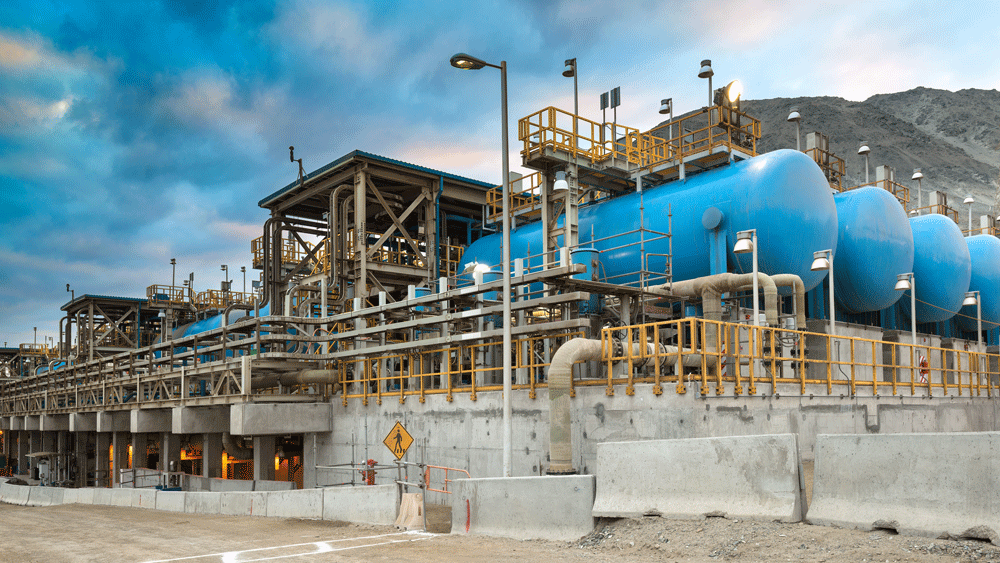
One of the region’s biggest opportunities for energy efficiency lies in desalination—a process crucial to securing potable water but heavily reliant on energy. Desalination involves multiple stages, including seawater pumping, pre-treatment, reverse osmosis and post-treatment. High-pressure pumps, which are critical in reverse osmosis, consume the bulk of the energy used in desalination plants.
Countries such as the UAE and Saudi Arabia depend heavily on desalination, with the Middle East and North Africa producing nearly half of the world’s 95 million cubic metres of desalinated water daily. This reliance is set to grow. By 2030, a report from the World Economic Forum (WEF) predicts a 40% gap between global water supply and demand.
Given that energy costs account for a significant portion of desalination plant operations, investing in energy-efficient water pumps not only reduces environmental impact but also generates long-term savings. This is crucial in a region that remains heavily dependent on fossil fuels.
Efficient pumps
Water pumps are vital across various sectors, but are also responsible for considerable energy consumption, leading to high operational costs and carbon emissions. In the UAE, where 93% of energy is derived from fossil fuels, upgrading to high-efficiency pumps can dramatically cut energy use, leading to significant cost savings and a smaller carbon footprint.
Grundfos’ high-efficiency pumps are designed to optimise energy consumption, with some installations reporting energy savings of up to 80%. These pumps leverage advanced motor technology and intelligent controls, adjusting pumping speeds based on demand to minimise wastage. This technology is a game changer for municipal water systems and industrial applications, where fluctuating water demand is the norm.
Breaking down investment barriers
Despite the clear benefits, budget constraints often make municipalities hesitant to invest in energy-efficient technologies. However, the long-term financial advantages far outweigh the initial costs. Energy-efficient pumps not only reduce energy use but also cut maintenance expenses, resulting in lower overall operational costs over time.
Municipalities can explore alternative financing models, such as public-private partnerships, to ease the financial burden. By demonstrating a commitment to efficiency and sustainability, cities can attract funding from international organisations and investors eager to back green initiatives.
For instance, Neom, Saudi Arabia's futuristic city, is pioneering an ambitious smart water infrastructure project that integrates energy-efficient water management with advanced desalination technology powered entirely by renewable energy. By leveraging international investments and cutting-edge technologies, Neom aims to build a zero-waste, fully sustainable water system that can be a model for other cities in the Middle East. This initiative showcases how strategic investment in sustainable technologies can unlock both environmental and economic gains.
Aligning with government-led sustainability agendas
Regional governments are making energy and water efficiency central to their sustainability strategies. Initiatives like Dubai’s Supreme Council of Energy (DSCE) plan to retrofit 30,000 buildings by 2030 underscore the importance of adopting efficient technologies. Companies that align with such agendas, including those implementing advanced water management solutions, can demonstrate both regulatory compliance and corporate responsibility.
For example, the UAE’s Water Security Strategy 2036 seeks to guarantee sustainable water access under all conditions. This strategy prioritises efficient water usage, reduced consumption, and the integration of advanced technologies. By aligning with government-led initiatives, companies can support national sustainability objectives while improving their own operational efficiencies.
The economic and environmental payoff
Focusing on the efficiency of water pumping systems is a smart business move that addresses critical water and energy challenges. Companies that take this approach not only improve their economic performance but also contribute to a more sustainable future. As the Middle East continues its transition towards a resilient infrastructure, integrating energy-saving technologies will be vital.
Moreover, adopting energy-efficient solutions can help the region reduce carbon emissions—a key goal for a part of the world heavily reliant on fossil fuels. By improving energy efficiency in water management, the Middle East can make a significant impact on its carbon footprint while addressing water scarcity challenges.
Call to action
It’s time for businesses and municipalities to act decisively. Investing in energy-efficient water pumping technologies is a powerful step toward achieving sustainability, economic efficiency and environmental stewardship. The region stands at a crossroads; embracing these innovations now will pave the way for a sustainable future in the Middle East.
In conclusion, while the Middle East faces unique challenges in water management and energy consumption, advanced, energy-efficient technologies offer a viable path forward. These solutions not only provide substantial cost savings and environmental benefits but also align with both regional and global sustainability goals. The time to act is now, and the future depends on how we manage our most vital resources.

You might also like...





A MEED Subscription...
Subscribe or upgrade your current MEED.com package to support your strategic planning with the MENA region’s best source of business information. Proceed to our online shop below to find out more about the features in each package.