

Kuwait and Egypt to face serious consequences over supply disruption
 Commentary
Wil Crisp
Oil & gas reporter
The 28 February attack by the US and Israel on Iran, and the chaotic conflict that has ensued, has dramatically eroded the image of liquefied natural gas (LNG) as a stable and reliable source of energy, removing around 20% of global LNG supply from the market.
Within the Middle East and North Africa (Mena) region, disruption to LNG production and distribution has left countries including Egypt and Kuwait with serious concerns over energy supplies.
Beyond the Mena region, major economies in Europe and Asia are also badly impacted by an absence of shipments from Qatar, one of the world’s biggest LNG producers, which stopped production of LNG on 2 March due to military attacks on several facilities.
Qatar subsequently declared force majeure on 4 March, helping to push benchmark gas prices to multi-year highs. The Dutch Title Transfer Facility (TTF) rose by more than 80%, hitting its highest levels since fuel markets spiked following Russia’s 2022 invasion of Ukraine, while Asian LNG spot prices also hit three-year highs.
The latest wave of turmoil for countries that are reliant on LNG has undermined the image of the fuel as a flexible and reliable source of energy, which was widely regarded as one of its key advantages.
When Kuwait signed its 15-year LNG supply contract deal with Qatar in 2020, Saad Sherida Al-Kaabi, the president and chief executive of Qatar Petroleum, said: “We are confident that the exceptional reliability of our LNG supplies will provide KPC [Kuwait Petroleum Corporation] with the required flexibility and supply security to fuel the State of Kuwait’s impressive growth.”
Similarly, in Egypt last year, when Prime Minister Mostafa Madbouli made an announcement about bringing a third floating LNG import terminal online, an official government statement said that the terminals would be “ensuring stable energy for households and industry”.
The latest crisis has highlighted that, in some ways, the LNG market can be even more dramatically disrupted by geopolitical issues than the oil market.
Unlike the oil market, where producers such as Saudi Arabia maintain spare capacity and US shale producers quickly ramp up production if prices move higher, LNG facilities typically operate close to full capacity, leaving few options to boost production if other producers go offline.
On top of this, compared to the oil market, much more of the production relies on a relatively small number of producers and transport routes.
Kuwait’s gas crunch
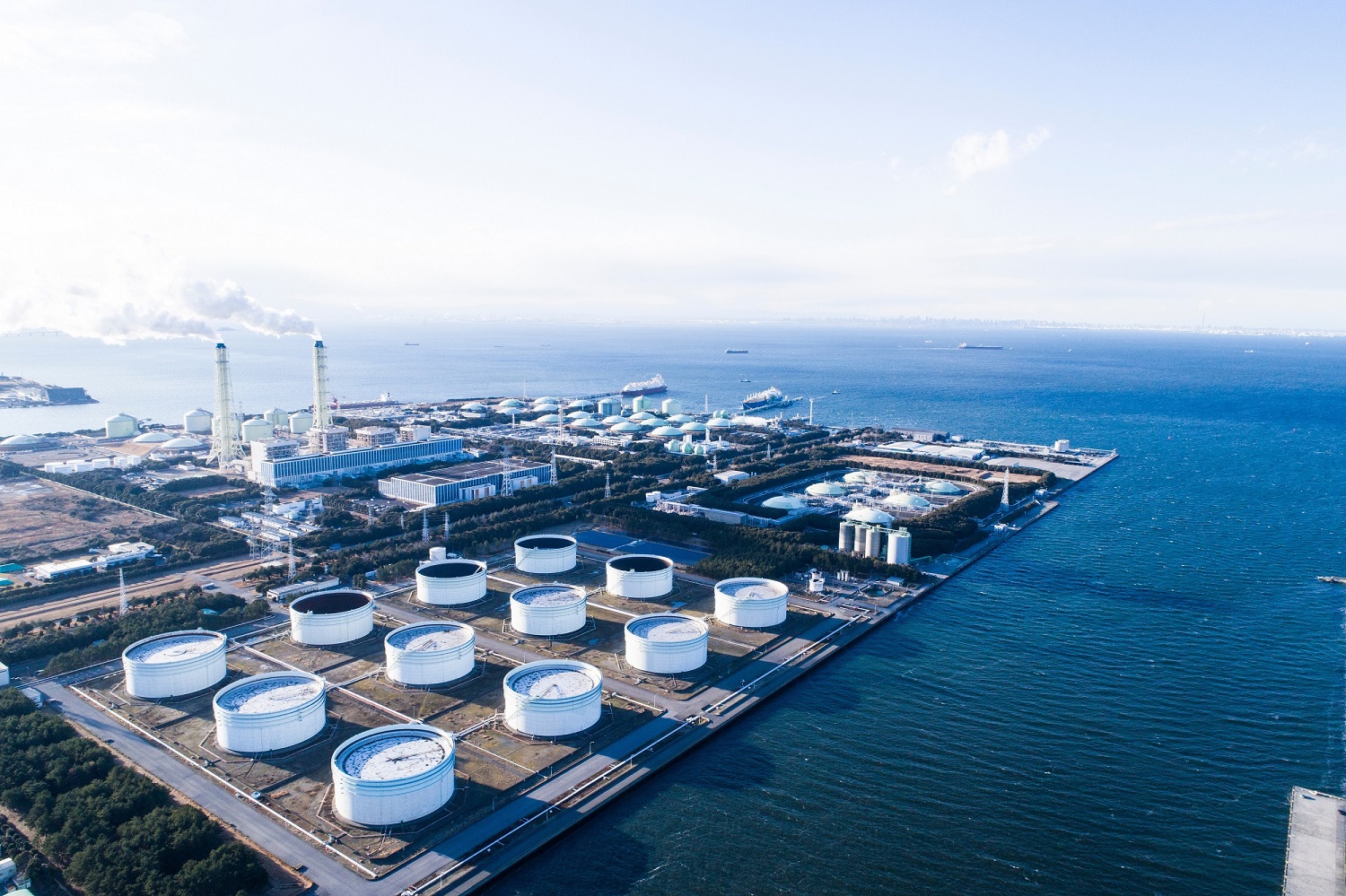
In recent years, Kuwait has invested billions of dollars in an energy strategy that has made it structurally reliant LNG imports, and the centerpiece of the country’s LNG infrastructure is its $2.9bn Al-Zour import terminal, which was brought online in July 2021.
It is the country’s first permanent facility to import LNG and has allowed the country to take delivery of large volumes of gas.
Between March 2025 and February 2026, Kuwait imported 7,352 kilotonnes (kt) of LNG, making it the second-biggest importer in the Mena region after Egypt, according to data recorded by the market analytics company Energy Aspects.
The vast majority of Kuwait’s imports came from Qatar, with significant additional volumes also coming from Oman and Nigeria.
Now, as a result of fallout from the Iran war, Kuwait is going to face serious issues surrounding gas imports, at least in the short term.
With the Qatari LNG export facilities offline, the Al-Zour facility can’t receive shipments from Qatar, and due to Iran’s Revolutionary Guard Corps (IRGC) effectively closing the Strait of Hormuz, ships cannot reach Kuwait’s import terminal from Oman or Nigeria.
The gas shortage in Kuwait is also likely to be exacerbated by Kuwait cutting oil production due to an inability to export crude via the Strait of Hormuz.
On 7 March, state-owned KPC said it had implemented a precautionary reduction in crude oil production due to “threats against safe passage of ships through the Strait of Hormuz”.
Shutting in production at oil fields will mean that the country will not be able to gather as much associated gas that is produced alongside the crude oil and feeds some domestic power stations.
Just how severe the consequences of Kuwait’s gas crunch will be remains to be seen.
Several of Kuwait’s gas power plants have been designed to be able to run on fuel oil in emergencies, so it is possible that the country will be able avoid widespread blackouts.
When these powers stations are switched to oil they are usually less efficient and have more maintenance issues.
Last summer, even without a major gas shortage, the country was forced to resort to rolling power cuts across some regions due to high electricity demand and insufficient generating capacity.
Egypt uncertainty
Egypt, the Mena region’s biggest LNG importer, is also going to face uncertainty over its LNG supplies in coming months.
Between March 2025 and February 2026, Egypt imported 9,440kt of LNG, but unlike Kuwait, the majority of its imports are purchased through more short-term agreements, mainly with third parties like trading houses.
Last year, it was reported that Egypt had signed deals for around 150 cargoes through to the summer of 2026.
While much of Egypt’s LNG is likely to come from the US, and won’t be directly impacted by the effective closure of the Strait of Hormuz, the recent surge in LNG prices could mean that the North African country will struggle to afford shipments.
Slava Kiryushin, an international oil and gas lawyer and a partner at the London-headquartered law firm HFW, says that the imports Egypt has already signed contracts for will only provide a partial buffer to the new higher price environment.
“While having existing deals in place is likely to help to mitigate Egypt’s exposure to the recent surge in LNG prices, it is unlikely that these deals will cover all of the country’s gas demand.
“Because of this, Egypt is likely to need to buy volumes on the spot market, where it will face much higher payments.”
Exacerbating the need for increased LNG imports, on 28 February Israel shut down production from its offshore gas fields due to security concerns, cutting pipeline exports to Egypt.
Prior to the fields being taken offline, Egypt was importing about 1.1 billion cubic feet a day (bcf/d) from the Tamar and Leviathan fields.
On 4 March, addressing concerns about energy supplies in the country, Madbouly said that Egypt had just concluded “several contracts” to procure gas shipments at “preferential prices” in cooperation with a range of countries and international companies.
However, he did not provide details about exact pricing of the deals.
Qatar deal
On top of the LNG deals Egypt has with trading houses, in January, Egypt signed a memorandum of understanding (MoU) with Qatar related to 2026 LNG imports.
The preliminary deal included plans for 24 LNG deliveries through the summer of this year, when energy demand typically peaks.
Now, the shuttering of Qatar’s export terminals and the effective closure of the Strait of Hormuz is casting a shadow over the deal and there is increased uncertainty over whether these deliveries will be executed.
Egyptian chemicals
As well as impacting power generation in Egypt, the higher gas prices are also likely to cause problems for Egypt’s petrochemicals sector, where natural gas is used as a feed stock.
In June last year, when Israel cut gas flows to Egypt after strikes on Iran, several major urea producers in Egypt were forced to stop production.
Misr Fertilizers Production Company (Mopco) is one of the companies that could feel the brunt of the gas shortage.
It is Egypt’s largest producer of nitrogen-based fertilisers and, in November last year, said that it was planning to invest $200m-$250m in 2026 and 2027, increasing its production capacity in the country.
Jordan and Bahrain
Jordan and Bahrain are also likely to be exposed to the surge in global LNG prices. They each respectively imported 665.7kt and 641.2kt of LNG between March 2025 and February 2026.
Both countries have recently invested in their capacity to import LNG, and were anticipating ramping up imports prior to the latest spike in international prices.
In April last year, Bahrain LNG Import Terminal (BLNG) received its first delivery of LNG since the terminal was officially commissioned in 2019. And, amid plans to boost imports to meet domestic demand, Spain-headquartered Noatum was awarded a five-year contract by state-owned Bapco Upstream in November to run marine services at the facility.
In Jordan, a new floating LNG import terminal (FSRU) arrived at the country’s Aqaba port in August 2025.
At the time, Sufian Batayneh, the general director of the country’s National Electric Power Company (Nepco), said that the terminal would benefit the region by providing LNG to operate Jordan’s power plants, as well as allowing the shipments of gas via pipeline to Egypt.
Now, with the global price of LNG at multi-year highs, it seems possible that both Jordan and Bahrain will have to choose between paying significantly higher prices for imports or scaling back their plans for increased deliveries.
Ongoing vulnerabilities
The latest disruption to the LNG markets has highlighted vulnerabilities to the global LNG supply chain and has undermined the image of stability that was previously seen a key reason why many countries have been making it a central pillar of their energy strategies.
Just how bad the economic damage will be for the Mena nations that are reliant on LNG imports will largely depend on how long it takes to bring Qatar’s export facilities back online and effectively reopen the Strait of Hormuz.
If the current disruption to the global LNG market does persist for an extended period of time and significant damage is done to economies like Kuwait and Egypt, other countries in the region may well think twice before committing to the development of LNG import infrastructure as a central part of their energy strategy.
You might also like...
Rail expansion powers Saudi Arabia’s infrastructure push
09 March 2026
Renewables projects in Oman near completion
09 March 2026

Dubai's real estate faces a hard test
09 March 2026
Bahrain’s Bapco Energies declares force majeure
09 March 2026
A MEED Subscription...
Subscribe or upgrade your current MEED.com package to support your strategic planning with the MENA region’s best source of business information. Proceed to our online shop below to find out more about the features in each package.