

The OECD's Nuclear Energy Agency says global nuclear capacity will triple by 2050 only under its most transformative scenario, with the Gulf's reactor procurement decisions among the projects that will determine which path the industry takes
Global nuclear capacity will triple by 2050 only if governments and industry achieve a step change in project delivery that has no recent precedent, according to a new outlook published by the OECD's Nuclear Energy Agency (NEA).
The Nuclear Energy Outlook tracks nearly 313 gigawatts electric (GWe) of new nuclear capacity under construction, planned or proposed worldwide, and finds that the tripling target agreed by 38 countries at the 28th session of the Conference of the Parties to the UN Framework Convention on Climate Change (Cop28) will be achieved in only one of its four modelled scenarios, the Transformative Scenario, which requires deployment rates far beyond anything the industry has managed to date.
Saudi Arabia, the UAE and Egypt are all at different stages of first-of-a-kind or fleet-expansion nuclear programmes, and where the NEA explicitly flags an open competition among reactor vendors that has yet to be resolved.
Global picture
Global installed nuclear capacity currently stands at close to 400GWe, with 78% located in OECD countries. The NEA's four scenarios diverge sharply by 2050: a Low Scenario reaching 347GWe, as OECD retirements offset new projects; a Current Trends Scenario, reaching 619GWe, still roughly 600GWe short of the tripling objective; an Ambitious Scenario, reaching 883GWe; and a Transformative Scenario, reaching 1,324GWe, driven by long-term national targets including the US' goal to quadruple capacity and India's target of 100GWe by 2047.
The centre of gravity for near-term construction has already shifted towards non-OECD countries, which account for 55% of the total project pipeline and around 80% of the 70GWe currently under construction, led by China with more than 33GWe.
China and Russia hold what the report describes as a strategic advantage in the international market, with Chinese-designed reactors accounting for 85GWe of projects and Russian-designed reactors accounting for 57GWe, more than half of which are export projects in countries including Egypt, Hungary and Turkiye.
Gulf programmes
The NEA's country-level assessment notes that Saudi Arabia is advancing preparations for its first commercial nuclear power plant as part of its Vision 2030 strategy, with Khor Duwaiheen – identified as the lead site for a planned 2.8GW facility – now moving towards the procurement phase. The report states that the kingdom has held ongoing technical and commercial negotiations with shortlisted vendors including EDF, Rosatom and Korea Hydro & Nuclear Power since 2023, citing MEED's earlier reporting on the talks.
In the UAE, the report confirms that Unit 4 of the Barakah nuclear power plant began commercial production in September 2024, completing the country's 5.6GW plant and bringing nuclear's share of UAE electricity generation to 25%. It also notes a November 2024 strategic collaboration agreement between Emirates Nuclear Energy Company and Abu Dhabi National Oil Company (Adnoc) to jointly assess small modular reactors and advanced reactor technologies for industrial applications, alongside potential use of excess heat from Barakah.
Egypt's El-Dabaa plant, being developed with Russia's Rosatom, is under construction, with four VVER-1200 reactors expected to supply around 10% of the country's electricity once fully operational. Commercial operation is targeted for the second half of 2028.
Vendor competition
The report's assessment of reactor technology choices carries a pointed message for Gulf procurement processes still under way. Across projects under construction, planned and proposed globally, around 60% are expected to use domestic reactor suppliers and 25% are expected to procure from foreign vendors, but 40% of proposed projects have yet to select a technology, a gap the NEA says leaves important markets in Asia, Africa and the Middle East open to competition among Chinese, Russian and OECD-based vendors from France, Korea and the US.
South Korea's APR design family, used at Barakah, has since won a competitive tender in Czechia, evidence the NEA cites of South Korean vendors building export momentum that will likely factor into Saudi Arabia's own vendor decision.
Financing gap
Delivering the higher-capacity scenarios will require a sharp rise in capital spending. Recent global capital expenditure on new nuclear has averaged around $30bn a year, driven mainly by China and Russia. For OECD countries, annual capital requirements will need to rise from about $12bn a year over the past decade to an average of $68bn in the Ambitious Scenario and $143bn in the Transformative Scenario, approaching $200bn a year during the 2030s in the most demanding case.
Non-OECD financing needs are comparatively lower, at $40bn-$62bn a year in the same two scenarios, reflecting recent construction experience and lower average costs, a dynamic that favours the state-backed financing models already used in Gulf and Russian-linked projects.
The NEA concludes that greater standardisation and fleet-based deployment could cut cumulative OECD capital expenditure needs in the Transformative Scenario by close to $850bn, a reduction of about 24%, underscoring that the industry's renewed policy momentum will only translate into installed capacity if supply chains, workforces and financing structures scale at a pace the sector has not achieved in decades.
 READ THE JULY 2026 MEED BUSINESS REVIEW – click here to view PDF
Stress test for Gulf aviation; Mixed performance as country outlooks diverge in the Levant; GCC tourism sector pivots from crisis to recovery mode.
Distributed to senior decision-makers in the region and around the world, the July 2026 edition of MEED Business Review includes:
> AIRPORTS: Dubai and Riyadh reaffirm airport ambitions > INDUSTRY REPORT: Dubai eyes tourism sector recovery > DATA CENTRES: Big Tech falls short on data centre promise > LEADERSHIP: Aramco’s citizen developers accelerate digital change |
To see previous issues of MEED Business Review, please click here
You might also like...
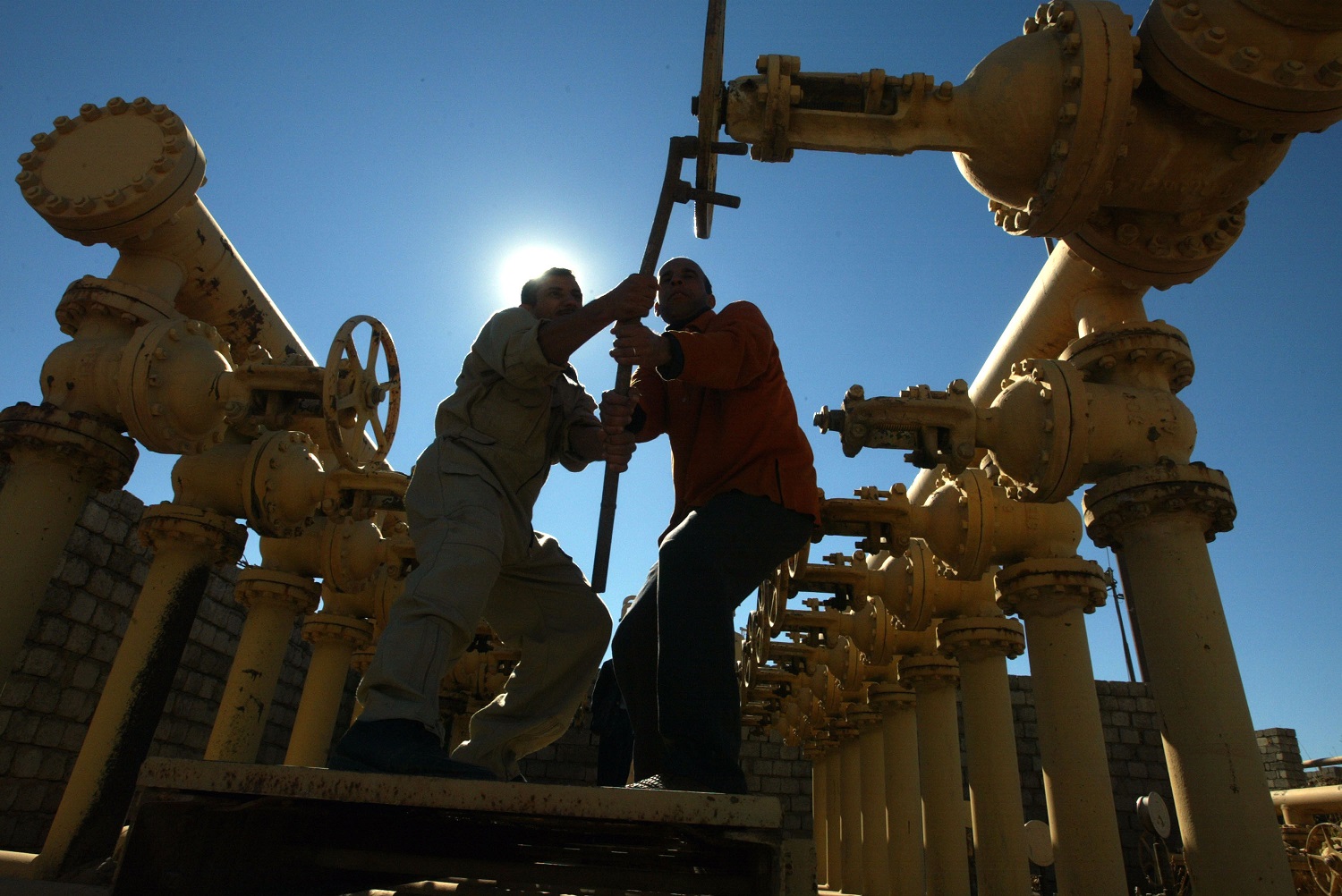
Rumaila oil output recovery to take three months
08 July 2026
A MEED Subscription...
Subscribe or upgrade your current MEED.com package to support your strategic planning with the MENA region’s best source of business information. Proceed to our online shop below to find out more about the features in each package.