


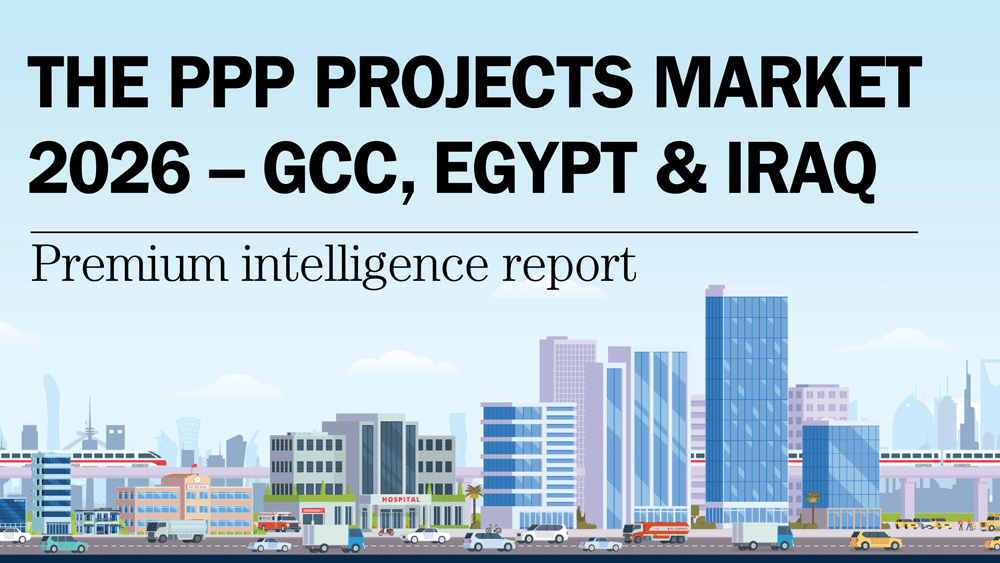
Governments are increasingly turning to PPPs to fund essential projects
 Public-private partnerships (PPPs) in the Middle East and North Africa region, particularly across the GCC, have become a central tool for delivering major infrastructure while supporting economic diversification away from hydrocarbons.
This expansion has been enabled by new PPP laws, clearer procurement frameworks, and dedicated government entities that develop project pipelines and manage delivery.
Key drivers
The motivations for adopting PPPs have evolved. While funding constraints remain relevant, the model is now also pursued to improve efficiency, innovation and long-term performance. PPPs align with national transformation programmes such as Saudi Vision 2030, which seek to expand the private sector’s role in the economy and reduce reliance on oil revenues. They are also a response to rapid population growth and rising expectations for public services, which create large investment requirements in utilities and social infrastructure.

By leveraging private sector expertise, technology and management best practices, governments aim to deliver projects on time, within budget, and operated effectively over the long term.
PPPs also broaden access to capital by attracting domestic investment and foreign direct investment, allowing the public sector to spread the cost of large projects over many years.
PPPs align with national transformation programmes such as Saudi Vision 2030
Unique characteristics
The Middle East’s approach to PPPs has some distinct features compared to Western models. Availability-payment structures are common, especially in social infrastructure and utilities. Under these models, government payments are linked to making an asset available at agreed performance standards rather than to user-demand volumes, reducing demand risk for the private partner and creating a stable, bankable revenue stream.
Sector focus is another defining feature. While transport and energy remain important, there has been a “third wave” of PPPs in healthcare, education and housing.
Financing structures often integrate Islamic finance instruments, reflecting regional preferences and providing access to deep pools of local capital. Finally, government oversight tends to remain strong.

You might also like...
Qiddiya signs sports medical centre project deal
13 April 2026
Kuwait opens bids for South Sabah cable contracts
13 April 2026

Saudi Arabia seeks firms for Riyadh mixed-use project
13 April 2026



A MEED Subscription...
Subscribe or upgrade your current MEED.com package to support your strategic planning with the MENA region’s best source of business information. Proceed to our online shop below to find out more about the features in each package.