

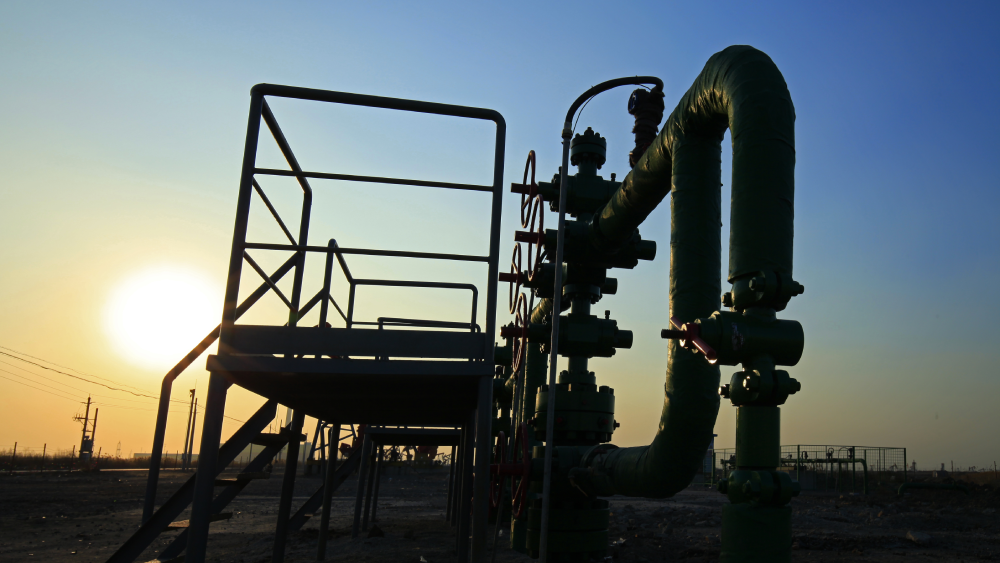
The war with Iran is paralysing large parts of the Mena region’s energy sector
While the oil and gas operations of the Middle East’s biggest producers are being dramatically curtailed by the conflict sparked by the US and Israel’s attack on Iran, US producers are likely to see windfall profits.
So far, the list of oil and gas assets in the Mena region disrupted by the conflict is long and includes facilities in all GCC nations, as well as Iraq and Iran itself.
In addition to oil fields and refineries that have been shut – either due to direct Iranian attacks or concerns over further strikes – about 20 million barrels a day (b/d) of production has been removed from the global market by the effective closure of the Strait of Hormuz.
Oil price
The disruption to global oil and gas supplies caused by the Iran conflict has pushed oil prices up by around 15%, with Brent briefly rising above $85 a barrel on 3 March – its highest level since July 2024.
This has boosted investor optimism about the outlook for US oil companies.
Texas-headquartered ExxonMobil made $56bn in profit in 2022 after Russia’s invasion of Ukraine created a sustained period of higher oil prices. It was a record year for the company, and it could see a similar bump this year if oil prices remain high.
Shale response
US shale producers are ramping up production to capitalise on higher oil prices, according to the Paris-based International Energy Agency (IEA).
Recently drilled shale wells could add around 240,000 b/d of supply in May, and an additional 400,000 b/d could be added in the second half of the year, according to an IEA document cited by the Financial Times.
Gas impact
The impact of the Iran conflict on liquefied natural gas (LNG) prices has been even more pronounced than on oil, with several gas benchmarks hitting multi-year highs.
The Dutch Title Transfer Facility rose by 55%, reaching its highest level since fuel markets spiked after Russia’s 2022 invasion of Ukraine.
One of the key factors driving prices higher was Qatar – the world’s second-biggest LNG producer – halting exports on 2 March after Iranian attacks on several facilities.
Qatar is expected to take at least several weeks to restart exports from its liquefaction terminals.
Not only will time be required to ensure the export route through the Strait of Hormuz is secure, but restarting LNG export terminals is also a gradual process. They require a slow restart to avoid damaging cryogenic equipment, which cools natural gas to around -160°C.
In addition, LNG trains must be brought back online sequentially; Qatar’s Ras Laffan hub has 14 trains.
US advantage
While the world’s second-biggest LNG producer is likely to be offline for some time, the US – the world’s biggest LNG producer – is already operating near full capacity and is benefiting from the higher-price environment.
Cheniere and Venture Global, the two biggest US LNG producers, have both seen their share prices rise amid the conflict.
Cheniere shares are up 18% since the start of February, while Venture Global’s share price has risen 12% over the same period.
The scale of additional revenues earned by US companies – and the revenue losses suffered in the Middle East’s oil and gas sector – will largely depend on how long the disruption linked to the Iran conflict continues.
If the disruption persists and significant long-term damage is done to Middle East oil and gas infrastructure, US-based oil and gas companies could record another year of record profits.
You might also like...
Executive briefing: US-Israel-Iran conflict
06 March 2026
UAE utilities say services stable amid tensions
06 March 2026

Drawn-out conflict may shift planning priorities
06 March 2026
A MEED Subscription...
Subscribe or upgrade your current MEED.com package to support your strategic planning with the MENA region’s best source of business information. Proceed to our online shop below to find out more about the features in each package.